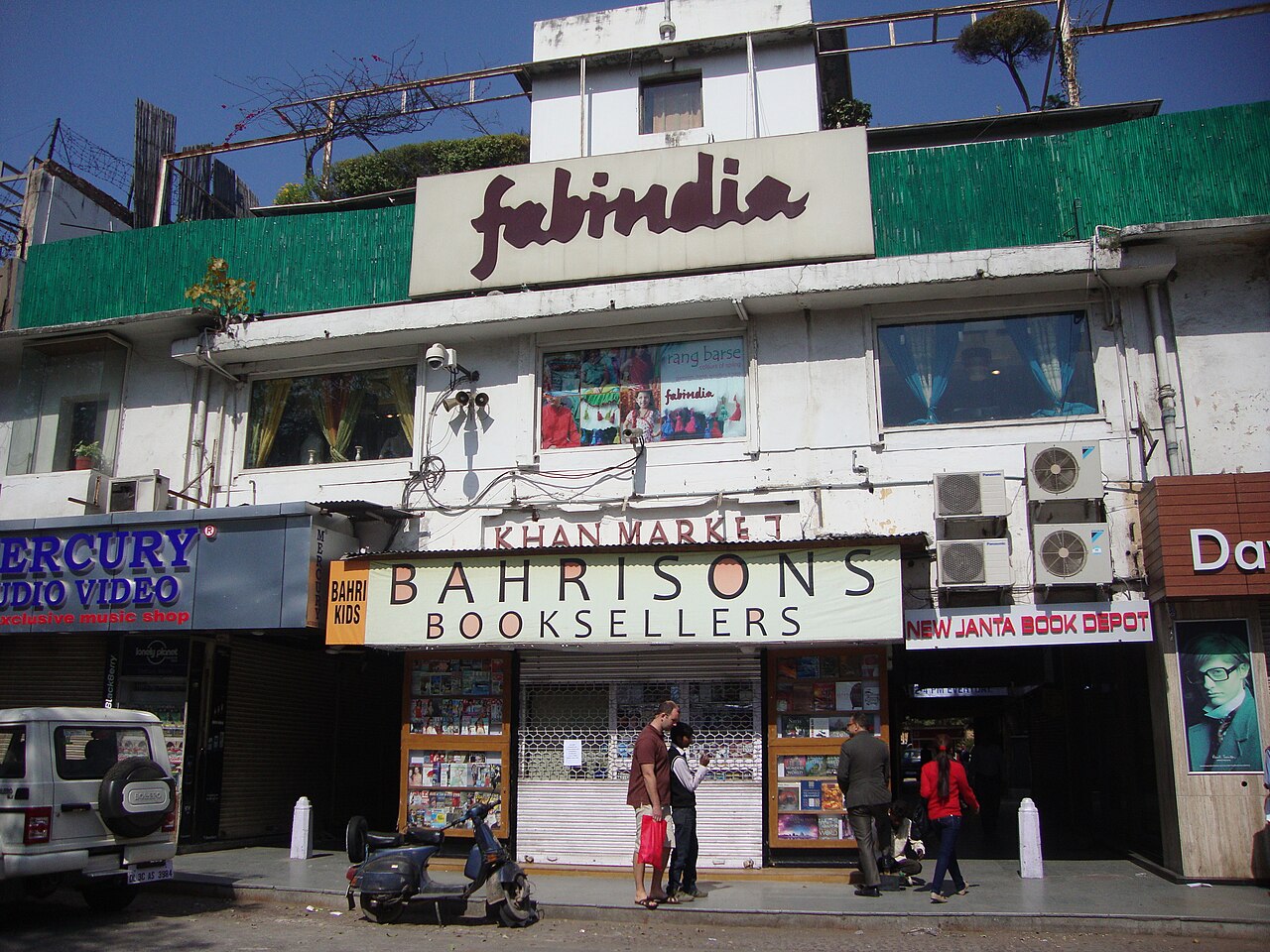
Khan Market is a market in Delhi, India. Opened in the early nineteen-fifties after independence. Named after freedom fighter Khan Abdul Jabbar Khan. Most visitors spend 1-2 hours here. The free Lokali audio guide runs 5 minutes.
✓ Verified October 2026 · how we write these guides
Visitor facts
| Time needed | 1-2 hours |
|---|---|
| Lokali audio guide | 5 min · free |
| Type | Market |
| Best for | Authentic finds |
| Location | Delhi, India |
| Coordinates | 28.5984, 77.2255 |
| Languages | 45, in the Lokali app |
The story
The air here smells of fresh coffee and old paperbacks, a mix that tells you Khan Market is not quite like the rest of Delhi. Step into the central lane and the noise of the city softens — replaced by the rustle of shopping bags, the clink of teacups on saucers, the low hum of conversation spilling out from café doorways. The pavement is smooth, the shopfronts freshly painted, and everything feels just a little more ordered than the streets beyond.
Khan Market opened in the early nineteen-fifties, one of the first retail developments built after independence. It was named after Khan Abdul Jabbar Khan, a freedom fighter and associate of Mahatma Gandhi, though the shops themselves were meant for civil servants and diplomats living in the new capital. The original tenants were tailors, chemists, grocers — practical trades for a practical neighbourhood. Over the decades, as embassies clustered nearby and Delhi's middle class grew wealthier, the market quietly transformed into something more upscale.
Walk the inner arcade and you will notice the layout has barely changed since the beginning. Two parallel rows of shops face each other across a narrow lane, with a handful of cross-passages connecting them. The architecture is modest — single-storey brick buildings with flat roofs and wide awnings — but the simplicity works. There is no grand entrance, no central plaza. You simply walk in from the street and find yourself among the stalls.
The bookshops are the soul of the place. Bahrisons and Faqir Chand have been here for decades, their shelves stacked floor to ceiling with novels, history, poetry, maps. Step inside and the temperature drops a few degrees. The smell of paper and binding glue is immediate. Regulars come to browse for hours, pulling down volumes, flipping through pages, chatting with the staff who know the stock by heart. These are not chain stores — they are family businesses, and the knowledge runs deep.
Outside, the cafés have multiplied. What was once a single tea stall is now a string of espresso bars, patisseries, juice counters, and brunch spots. You will see freelancers tapping on laptops, diplomats meeting over croissants, students nursing cold brews between classes. The seating spills onto the pavement in good weather, and the crowd is a mix of expats, journalists, designers, and neighbourhood regulars. It is one of the few places in Delhi where you can sit outside with a book and not be hustled.
Khan Market consistently ranks among the most expensive retail addresses in the world, competing with Fifth Avenue and the Champs-Élysées in per-square-foot lease rates. That statistic surprises most visitors — the market feels intimate, almost village-like — but it reflects the buying power of the clientele and the scarcity of well-maintained commercial space in central Delhi. The rents have pushed out some of the older trades. The tailors and cobblers are mostly gone, replaced by boutiques selling Italian shoes and French skincare.
Yet the market has not entirely lost its character. The fruit vendor still sets up his cart at the corner each morning, pyramids of mangoes and papayas glowing in the early light. The flower seller wraps marigold garlands in twists of newspaper. The barber shop near the back lane still uses a straight razor and hot towels, and the queue on Saturday mornings stretches out the door. These small pockets of the old economy survive, tucked between the wine shops and the sushi counters.
The best time to come is mid-morning on a weekday, when the crowds thin and you can move through the aisles without jostling. The light is softer then, filtering through the awnings, and the shopkeepers have time to talk. Ask about a book, a fabric, a particular spice, and you will get a story along with the sale. That conversational ease is what keeps people coming back — not just the goods, but the texture of the exchange.
Park yourself at one of the outdoor tables with a coffee and watch the flow. Diplomats in dark suits, students in jeans and sneakers, elderly residents with cloth shopping bags, delivery riders weaving through on scooters. The mix is what makes Khan Market work — a crossroads where different layers of Delhi overlap for a few hours, then peel away again. It is not a monument, not a spectacle. Just a well-worn strip of pavement where the city pauses to browse, to sip, to breathe.
As you leave, glance back at the awnings and the narrow lanes. This market has survived because it adapted without erasing itself entirely. The bookshops anchor the memory, the cafés draw the new crowd, and somewhere in between, the old rhythms persist. It is a small lesson in how a neighbourhood can change and still feel like home.
Key facts
What to look for
Practical tips
Common questions
How long do you need at Khan Market?
Plan 1-2 hours. That is the time most visitors spend at Khan Market. The free Lokali audio guide runs 5 minutes and is made to listen to while you walk.
Is there a free audio guide to Khan Market?
Yes — the Lokali app narrates Khan Market free of charge in 50+ languages. No ticket, tour group or subscription, and it works offline once downloaded.
Where is Khan Market?
Khan Market is in Delhi, India, at 28.5984, 77.2255. Tap the map link on this page for directions.
What should you know before visiting Khan Market?
Visit mid-morning on weekdays to avoid crowds
What is Khan Market known for?
Opened in the early nineteen-fifties after independence
What is the best time to visit Khan Market?
Visit mid-morning on weekdays to avoid crowds
On the map
Opens directions to Khan Market from your location.
More to see in Delhi




Hear Khan Market in your language
The full story, narrated, in 50+ languages. Download it before you go and it plays offline, at your own pace, with no ticket and no tour group.