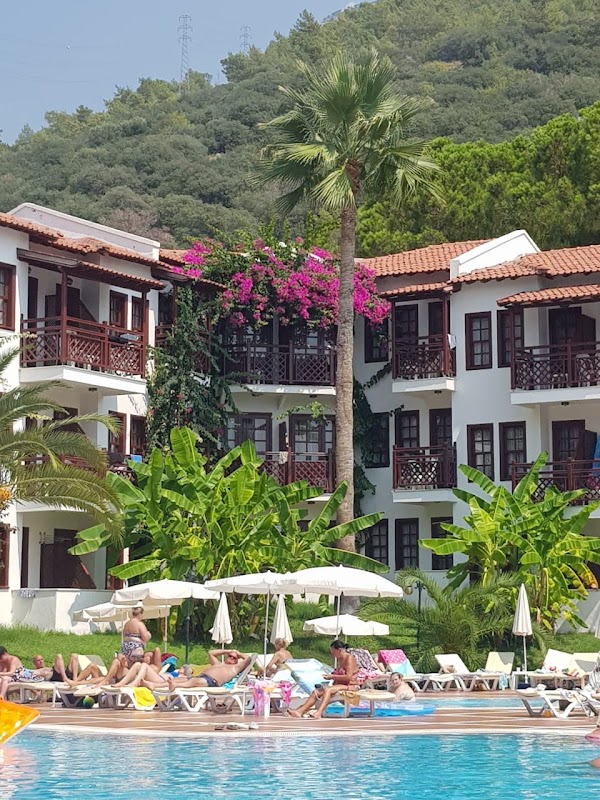
Ölüdeniz Blue Lagoon is a beach in Fethiye, Türkiye. Ölüdeniz means dead sea — named for its still water. Babadağ mountain rises nearly two thousand metres above the bay. Most visitors spend 3-5 hours here. The free Lokali audio guide runs 7 minutes.
✓ Verified October 2026 · how we write these guides
Visitor facts
| Time needed | 3-5 hours |
|---|---|
| Lokali audio guide | 7 min · free |
| Type | Beach |
| Best for | Photography |
| Location | Fethiye, Türkiye |
| Coordinates | 36.5497, 29.1156 |
| Languages | 45, in the Lokali app |
The story
Stop at the viewpoint above the bay, or simply look up from the sand, and count the blues. There is pale glass-green at the shore, then bands of turquoise, then a deep open-water blue beyond the sandspit. The water lies almost perfectly still. Pines lean out over it. Behind you, a grey mountain wall climbs into the sky, and above the ridge small bright wings drift downward — paragliders, dozens of them, circling like slow confetti.
Ölüdeniz means dead sea in Turkish. The name has nothing to do with the salt lake in the Middle East. Here it simply means still water. A long spit of sand and pine, called Kumburnu, curls across the mouth of the bay and closes it off into a lagoon. Storms that churn the open coast barely ripple the surface inside. Sailors are said to have sheltered here for centuries, trusting this calm water in any weather.
One local story tells of a young sailor and his captain caught in a storm along these cliffs. The young man swore that a calm harbour lay behind the rocks. The captain refused to believe him — until the boat slipped through the gap into flat, quiet water. Versions of the tale differ from teller to teller, and none of them may be true. The point of the story survives anyway. This lagoon has always meant safety.
Today the lagoon sits inside a protected nature park. You pay a small fee at the gate, and the rules inside are strict about litter, noise, and construction. That protection matters, because Ölüdeniz appears on postcards across the world and the summer crowds are real. The water stays clean and clear all the same. Beneath the surface, a sandy bottom slopes gently away, and the shallows warm quickly in the morning sun. Children can wade far out with the water still at their waist.
Swimmers share the lagoon with small fish that flicker over the sand, and in clear patches you can watch your own shadow move along the bottom. Snorkelling here is gentle rather than dramatic — sea grass, silver fry, the occasional crab — but the visibility is excellent. The beach holds a Blue Flag, an international mark for clean water and good management, and the calm inside the spit makes this a favourite first sea swim for young children.
Now turn and face the mountain. Babadağ rises nearly two thousand metres almost straight from the sea. Its name means father mountain. The height, the steady afternoon winds, and the soft beach landing far below make this one of the best-known paragliding sites on Earth. Pilots launch from terraces high on the slopes and ride the air for half an hour or more. A cable car now climbs the mountain, so you can stand at the launch platforms without flying at all.
Watch the sky for a few minutes and you will learn the routine. Specks appear over the ridge. They spiral downward, stacking up like slow traffic, then glide out across the bay. Tandem passengers scream, then laugh, then go quiet. One by one they swing in over Belcekız beach and land on their feet beside the promenade. Each autumn, pilots from many countries gather here for an international air games festival, and the sky fills with wings, smoke trails, and acrobatics.
There are really two beaches here. Belcekız faces the open sea — a wide curve of pebble and sand with a lively front of cafes and a little surf on windy days. The lagoon beach, inside the park, is quieter and stiller, with sunbeds under the pines and water as flat as a pool. Locals argue about which one is better. The honest answer is to try both in a single day and join the argument.
Walk the Kumburnu spit if you have a spare hour. Pines shade the sand, and the ground is soft with fallen needles. On one side, the open sea glitters and moves. On the other, the lagoon barely breathes. At the tip, the two waters meet across a narrow channel, and the colour bands are at their sharpest. It is a simple, flat walk the whole way, and it shows you exactly how this rare place is built.
Ölüdeniz is also a doorway to Lycia — the ancient seafaring region of this coast. The Lycian Way, a marked long-distance footpath, begins just above the resort at Ovacık and runs for more than five hundred kilometres along cliffs and through mountain villages toward Antalya. Even its first hour rewards you. The trail climbs steadily above the bay, and the lagoon shrinks below into a blue eye ringed with pine.
Boats leave the beach each morning for the coves beyond. Some head for Butterfly Valley, a canyon beach beneath high cliffs. Others circle Gemiler Island, where Byzantine church ruins cover the slopes right down to the water. Some researchers believe the island once held the original tomb of Saint Nicholas, before his remains were moved along the coast. The boat crews tell that story with far more confidence than the historians do.
A practical word. In July and August the bay fills up, and the lagoon sunbeds go early. Morning is the golden window — the water is glassy, the light is low, and the paragliders have not yet filled the sky. By late afternoon the mountain throws long shadows across the bay and the colours deepen again. In May or October, you may have whole stretches of sand nearly to yourself, and the sea is still warm enough to swim.
Before you leave, wade in one more time and stand still until the surface settles around you. The mountain hangs upside down in the water. Small wings drift across its reflection. Somewhere behind you a boat rope creaks against a pine trunk. This sea earned its strange name by doing almost nothing at all — and after a few quiet minutes standing in it, you begin to understand why people have crossed centuries to find exactly this kind of stillness.
Key facts
What to look for
Practical tips
Common questions
How long do you need at Ölüdeniz Blue Lagoon?
Plan 3-5 hours. That is the time most visitors spend at Ölüdeniz Blue Lagoon. The free Lokali audio guide runs 7 minutes and is made to listen to while you walk.
Is there a free audio guide to Ölüdeniz Blue Lagoon?
Yes — the Lokali app narrates Ölüdeniz Blue Lagoon free of charge in 50+ languages. No ticket, tour group or subscription, and it works offline once downloaded.
Where is Ölüdeniz Blue Lagoon?
Ölüdeniz Blue Lagoon is in Fethiye, Türkiye, at 36.5497, 29.1156. Tap the map link on this page for directions.
What should you know before visiting Ölüdeniz Blue Lagoon?
Enter the lagoon through the nature park gate — small fee applies
What is Ölüdeniz Blue Lagoon known for?
Ölüdeniz means dead sea — named for its still water
What is the best time to visit Ölüdeniz Blue Lagoon?
Come early morning for glassy water and thin crowds
On the map
Opens directions to Ölüdeniz Blue Lagoon from your location.
Hear Ölüdeniz Blue Lagoon in your language
The full story, narrated, in 50+ languages. Download it before you go and it plays offline, at your own pace, with no ticket and no tour group.