
Museo Nazionale di San Marco
43.7782° N · 11.2593° E · Museum
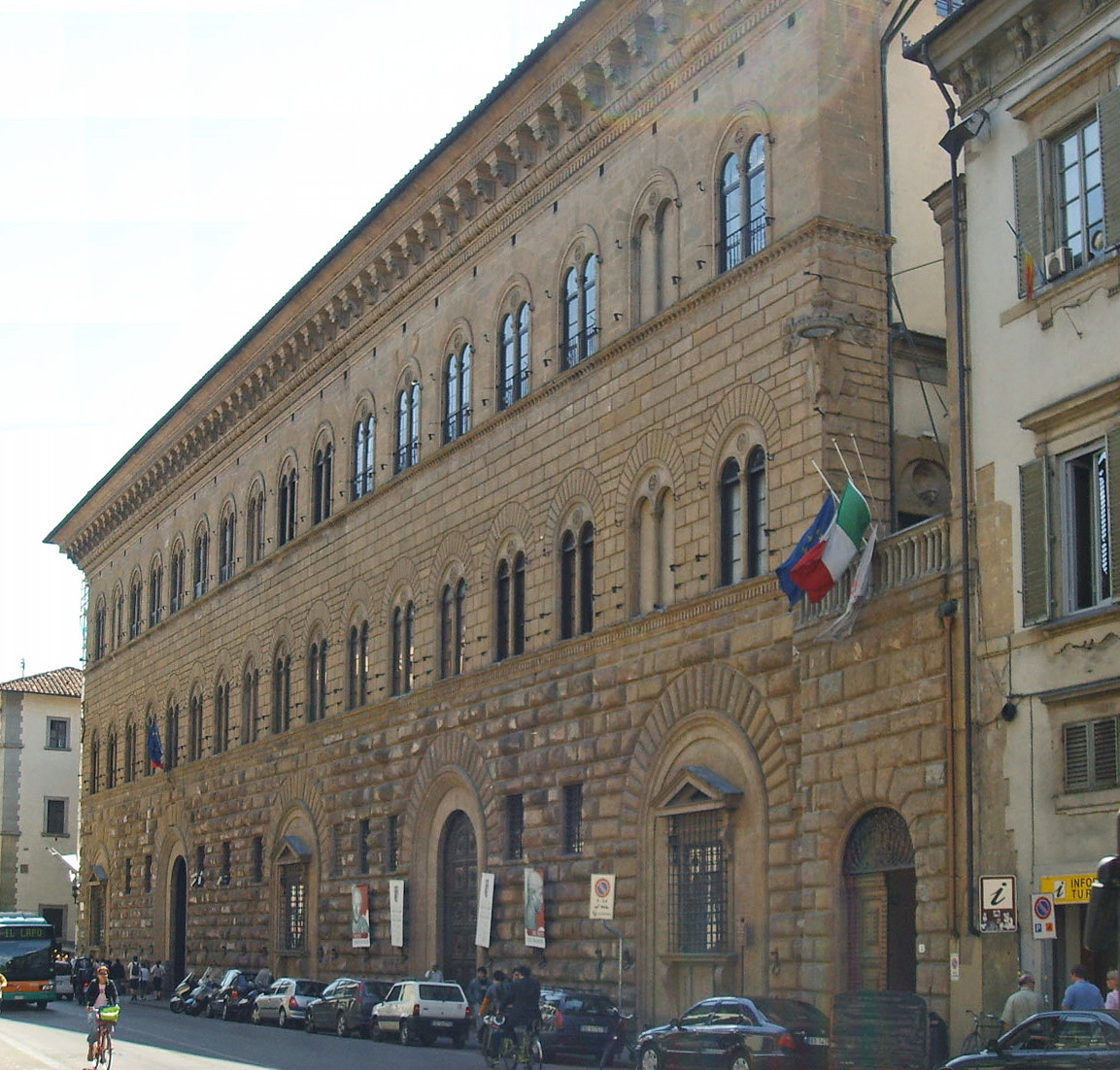
Photo: Sailko · CC BY-SA 4.0 · Wikimedia Commons
Museo Nazionale di San Marco is an art museum in the former convent of San Marco in Florence, Italy. Cosimo de' Medici funded the convent's rebuilding in the 1430s. The free Lokali audio guide runs 6 minutes.
✓ Published October 2026 · how we write these guides
Visitor facts
| Lokali audio guide | 6 min · free |
|---|---|
| Type | Museum |
| Location | Florence, Italy |
| Coordinates | 43.7782, 11.2593 |
| Official website | museitoscana.cultura.gov.it |
| Languages | 50+, in the Lokali app |
The story
Listen for a moment. The traffic of Piazza San Marco fades as soon as you pass inside. Your footsteps soften on old stone. Around you, a quiet cloister opens to the sky, with a great cedar at its centre and arches running in a calm, even rhythm. The air smells faintly of dust, plaster, and cut grass. This place was built for silence, and it still keeps a little of it.
You are standing in the Museo Nazionale di San Marco, a former Dominican convent. The Dominicans are an order of preaching friars founded in the thirteenth century. In the 1430s, a community of these friars moved here from nearby Fiesole. Their patron was Cosimo de' Medici, the banker who quietly ran Florence. He paid for a full rebuilding of the old convent. For a man whose fortune came from lending money, this was also a way to care for his soul.
Cosimo chose the architect Michelozzo, his favourite builder. Michelozzo gave the convent clean lines, grey stone columns, and white walls. Nothing here shouts. The cloister around you is named after Saint Antoninus, a friar of this house who later became Archbishop of Florence. Look at the lunettes, the half-moon paintings above the arches. Many show scenes from his life, painted generations after his death.
Now for the real reason most people come. One of the friars who lived here was a painter. Today we call him Fra Angelico, which means the angelic brother. He was a working friar, not a court artist. With his assistants, he covered this convent with frescoes, paintings made on wet plaster. In 1982, Pope John Paul the Second beatified him, and he is now honoured as the patron of artists.
Before climbing upstairs, step into the old Pilgrims' Hospice, just off the cloister. Travellers once slept here. Today the long room holds the largest group of Fra Angelico's panel paintings anywhere. Look for the great Deposition, Christ lowered gently from the cross against a green Tuscan landscape. Look also for the large tabernacle he painted for the linen merchants' guild, with its gold background and musician angels along the frame.
Across the cloister, find the Chapter House. This was where the friars met to confess faults and discuss convent business. One whole wall holds a large Crucifixion by Fra Angelico. The background is now a dull brown, because the original blue has been lost over time. In the same space hangs a heavy bronze bell. Its story belongs to a later, darker chapter, and we will come to it shortly.
Nearby is a small refectory, a dining hall. Here Domenico Ghirlandaio painted a Last Supper, a subject Florentine artists often placed where monks ate. Notice the ordinary details on the table... the fruit, the glasses, the folds of the cloth. The friars ate their meals in silence while Christ and the apostles shared a meal above them. Ghirlandaio's cat is a detail many visitors walk past without seeing, so look closely near Judas.
Now climb the stairs to the dormitory. Stop at the top — and look up. Facing you is Fra Angelico's Annunciation, the angel Gabriel greeting the Virgin Mary in a simple loggia. Many people know this painting from posters and postcards. Here it was a daily reminder. Every friar who climbed these stairs to sleep met this scene. A small inscription below asked them to say a Hail Mary as they passed.
Turn into the corridors. On both sides are small cells, each one a friar's bedroom. In almost every cell, one fresco faces the window. The scenes are quiet and spare, with very little background. They were not made for an audience. They were made to help one man pray. Walk slowly, and peek into as many cells as you can. Each painting was meant to be seen alone, in a small room, by soft light.
One cell surprises nearly everyone. It shows the Mocking of Christ. Christ sits blindfolded, calm and still. Around his head float disembodied hands striking him, and a face spitting at him, with no bodies attached. It looks almost modern. The painter reduced cruelty to its gestures alone. Find also the Noli me tangere, where Christ meets Mary Magdalene in a garden full of tiny flowers.
At the end of one corridor are larger rooms, the cells kept for Cosimo de' Medici himself. He came here to retreat and pray among the friars. In a different corridor, you reach the rooms of a very different man — Girolamo Savonarola, the fiery Dominican preacher who became prior here in the 1490s. He attacked luxury, corruption, and the Medici. For a few years, his sermons shaped the whole city.
Savonarola's fall was swift. In 1498, a crowd attacked this convent, and the friars rang that bronze bell from the Chapter House to call for help. Locals called it the Piagnona, after the nickname of Savonarola's followers, the weepers. He was arrested, and in May 1498 he was executed in Piazza della Signoria. Inside his cells you can see objects linked to him, and a sharp profile portrait painted by his follower Fra Bartolomeo.
Before you leave, visit the library by Michelozzo, a long hall of light grey columns and vaults. It was among the first libraries in Renaissance Europe open to scholars beyond the convent. As you walk back down the stairs, notice how the light changes on the white walls. The convent became a state museum in the late nineteenth century, but its rooms still keep their original purpose. When you step back into the piazza, carry that quiet with you for a few steps.
Key facts
What to look for
Practical tips
Common questions
Is there a free audio guide to Museo Nazionale di San Marco?
Yes — the Lokali app narrates Museo Nazionale di San Marco free of charge in 50+ languages. The guide runs about 6 minutes, covers the history, what to look for on site and practical tips, and works offline once downloaded.
Where is Museo Nazionale di San Marco?
Museo Nazionale di San Marco is in Florence, Italy, at 43.7782, 11.2593. Tap the map link on this page for directions from where you are.
What is Museo Nazionale di San Marco known for?
Cosimo de' Medici funded the convent's rebuilding in the 1430s. Michelozzo designed the cloisters, dormitory, and library.
What should you look for at Museo Nazionale di San Marco?
Floating hands striking Christ in the Mocking of Christ fresco. The Annunciation facing you at the top of the dormitory stairs. The bronze Piagnona bell displayed in the Chapter House.
What should you know before visiting Museo Nazionale di San Marco?
Pause at the top of the stairs before entering the corridors. Visit the Pilgrims' Hospice first, before climbing to the dormitory.
When is the best time to visit Museo Nazionale di San Marco?
Go on a quieter weekday to enjoy the cells in silence.
On the map
Opens directions to Museo Nazionale di San Marco from your location.
More to see in Florence



Hear Museo Nazionale di San Marco in your language
The full story, narrated, in 50+ languages. Download it before you go and it plays offline, at your own pace, with no ticket and no tour group.