
National Archaeological Museum, Florence
43.7762° N · 11.2622° E · Museum
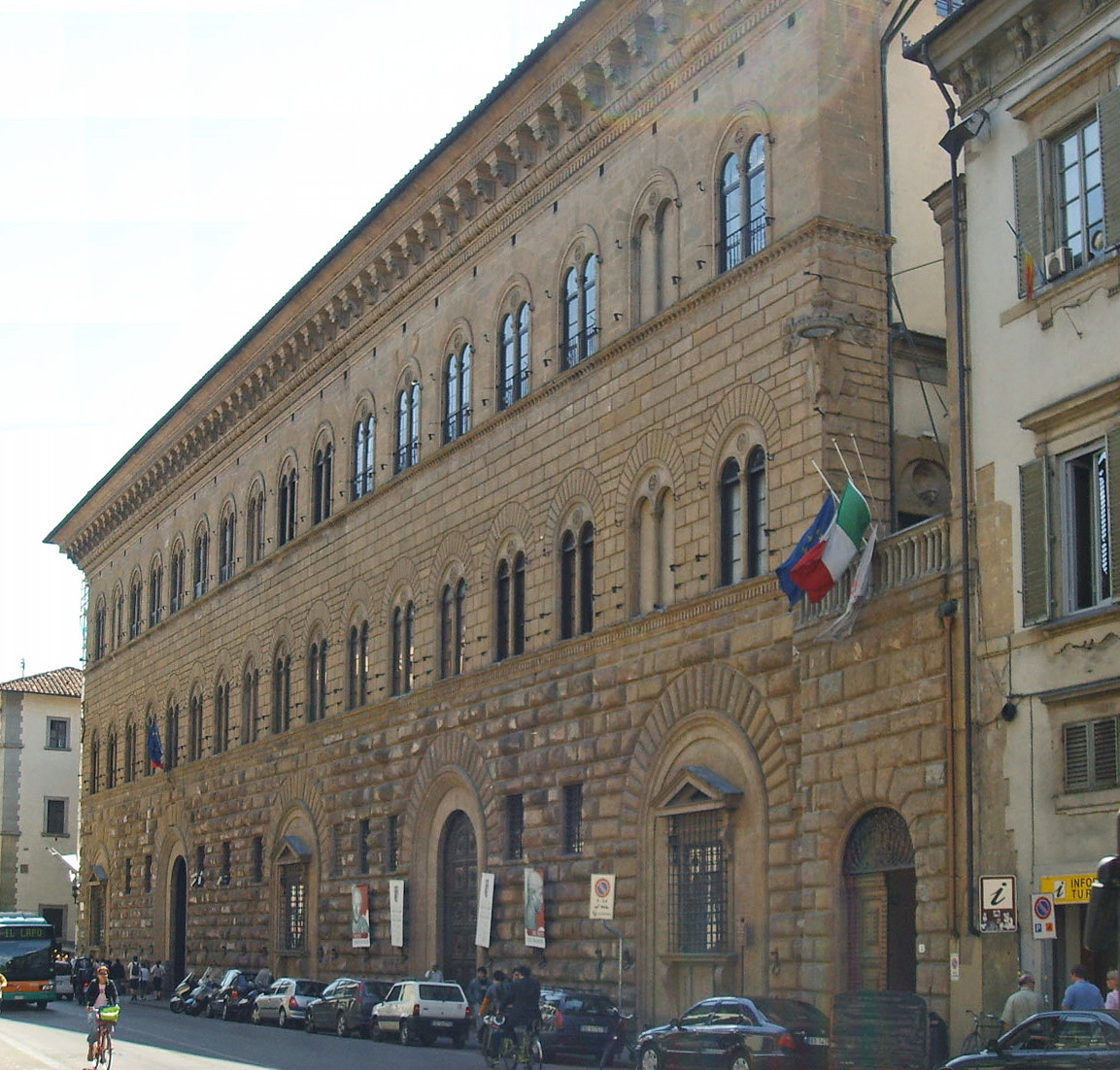
Photo: Sailko · CC BY-SA 3.0 · Wikimedia Commons
National Archaeological Museum, Florence is an archaeological museum of Florence, Italy. Housed in the seventeenth-century Palazzo della Crocetta. The free Lokali audio guide runs 7 minutes.
✓ Published October 2026 · how we write these guides
Visitor facts
| Lokali audio guide | 7 min · free |
|---|---|
| Type | Museum |
| Location | Florence, Italy |
| Coordinates | 43.7762, 11.2622 |
| Official website | archeotoscana.beniculturali.it |
| Languages | 50+, in the Lokali app |
The story
Step in from the square, and the noise of Florence drops away. The floors are cool stone. The light falls softly through tall windows onto glass cases. Somewhere a door creaks, and footsteps echo down a long corridor. Most visitors in this city queue for paintings and marble saints. Here, you are standing among things far older. These objects were made by people who lived in Tuscany long before the Renaissance... and long before Rome.
This is the National Archaeological Museum of Florence. It sits just off Piazza della Santissima Annunziata, a few minutes' walk from the cathedral. The building itself is a palace, known as the Palazzo della Crocetta. It was built in the early seventeenth century for Maria Maddalena de' Medici, a princess of the ruling family. Look around as you walk. The rooms still have the proportions of a private residence, not a purpose-built gallery.
Here is the first detail most people miss. The princess had a raised private passage built from this palace to the nearby church of the Santissima Annunziata. Through it, she could reach the church and attend Mass without walking through the streets in public view. Accounts differ on her reasons, and a disability is often mentioned. Either way, the building was shaped around privacy. Centuries later, the archaeological collections moved in, in the late nineteenth century.
The heart of the museum is Etruscan. The Etruscans were the people who ruled much of central Italy before Rome absorbed them. They built cities on hilltops across Tuscany. They traded across the Mediterranean, and they were famous for their bronze work. Much of what we know about them comes from their tombs. So many objects here were made for the dead — urns, figurines, painted vessels, and jewellery meant to travel into the afterlife.
Now look for the creature that the museum is best known for. The Chimera of Arezzo is a bronze monster from Greek myth. It has the body and head of a lion. A goat's head rises from its back. Its tail ends in a snake. The beast is wounded, and you can see it. The body is tense, the mouth is open, and the mane bristles. It was cast by Etruscan craftsmen more than two thousand years ago.
The Chimera was dug up in Arezzo in 1553. Grand Duke Cosimo de' Medici took it into his collection almost at once. For the Medici, it was more than a beautiful object. It linked their rule to the ancient Etruscan past of Tuscany. Look closely at the right front leg. There is a short inscription in the Etruscan alphabet, which reads from right to left. Many scholars think it marks the statue as a gift to a god.
Here is the second surprise. The snake tail you see is not original. The tail was missing when the bronze was found, and it was added in a later restoration. Legend has it that the goldsmith Benvenuto Cellini worked on the statue, and he did write about cleaning Etruscan bronzes for Cosimo. But the tail itself is usually dated to the eighteenth century. So even this ancient monster carries the hand of more than one era.
Nearby, find another bronze, the Orator. In Italian, he is called the Arringatore. He is a life-sized man in a toga, with one arm raised as if he is about to speak to a crowd. He was found near Lake Trasimeno, east of Florence. An Etruscan inscription on the hem of his clothing gives his name as Aule Meteli. He is dressed as a Roman, but he is named as an Etruscan. In one figure, you can see two cultures merging.
The museum has a second great collection, and it comes from Egypt. In the late 1820s, a joint French and Tuscan expedition travelled along the Nile. It was led by Jean-François Champollion, the man who deciphered hieroglyphs, and by his Italian student Ippolito Rosellini. The objects they brought back form the core of the Egyptian rooms. Today, this is one of the largest Egyptian collections in Italy, second only to the museum in Turin.
In the Egyptian rooms, take your time. There are painted coffins, statues, small amulets, and everyday tools. One object stands out for its rarity: a wooden chariot from ancient Egypt. Wood rarely survives thousands of years, so complete chariots are very uncommon anywhere in the world. Stand beside it and think about the light frame, built for speed. It was made for a world of desert roads and royal hunts.
Back among the Greek pottery, look for the François Vase. It is a large painted mixing bowl from Athens, used to mix wine with water at banquets. It is covered with bands of tiny black figures from Greek myth, and many of them carry their names. It was found in Etruscan territory in the nineteenth century. In 1900, a museum guard smashed it in an attack. The vase was pieced back together, and you can still see the repair lines.
The museum carries a scar from Florence's recent history too. In November 1966, the Arno river flooded the city. Water and mud poured into the lower floors of buildings across the centre, and this museum was badly hit. Thousands of objects were damaged. Restoration work continued for many years afterwards. Some rooms reopened slowly, and parts of the collection were rearranged. When the museum feels quiet and spacious, remember that it was rebuilt from that disaster.
If the garden is open during your visit, step outside. Reconstructions of Etruscan tombs stand among the plants and gravel paths. They were assembled using original stones and give a sense of how these burial chambers looked. The air smells of earth and leaves, and the noise of the city returns faintly over the walls. It is a calm place to rest after the dense galleries indoors.
As you leave, pause in the square outside. To your left and right are arcades, churches, and the old foundling hospital of Florence. This is the Renaissance city most people come to see. But you have just walked through the city that came before it. Look at the stones under your feet and the hills beyond the rooftops. The Etruscans walked these same valleys. Their bronzes are still here, just a few steps from the crowds.
Key facts
What to look for
Practical tips
Common questions
Is there a free audio guide to National Archaeological Museum, Florence?
Yes — the Lokali app narrates National Archaeological Museum, Florence free of charge in 50+ languages. The guide runs about 7 minutes, covers the history, what to look for on site and practical tips, and works offline once downloaded.
Where is National Archaeological Museum, Florence?
National Archaeological Museum, Florence is in Florence, Italy, at 43.7762, 11.2622. Tap the map link on this page for directions from where you are.
What is National Archaeological Museum, Florence known for?
Housed in the seventeenth-century Palazzo della Crocetta. Chimera of Arezzo was unearthed in Arezzo in 1553.
What should you look for at National Archaeological Museum, Florence?
Etruscan inscription on the Chimera's right front leg. The goat's head wound on the Chimera's back. Raised arm and toga hem of the Orator.
What should you know before visiting National Archaeological Museum, Florence?
Head first to the Chimera before tour groups arrive. Combine your visit with Piazza della Santissima Annunziata.
On the map
Opens directions to National Archaeological Museum, Florence from your location.
More to see in Florence


Hear National Archaeological Museum, Florence in your language
The full story, narrated, in 50+ languages. Download it before you go and it plays offline, at your own pace, with no ticket and no tour group.