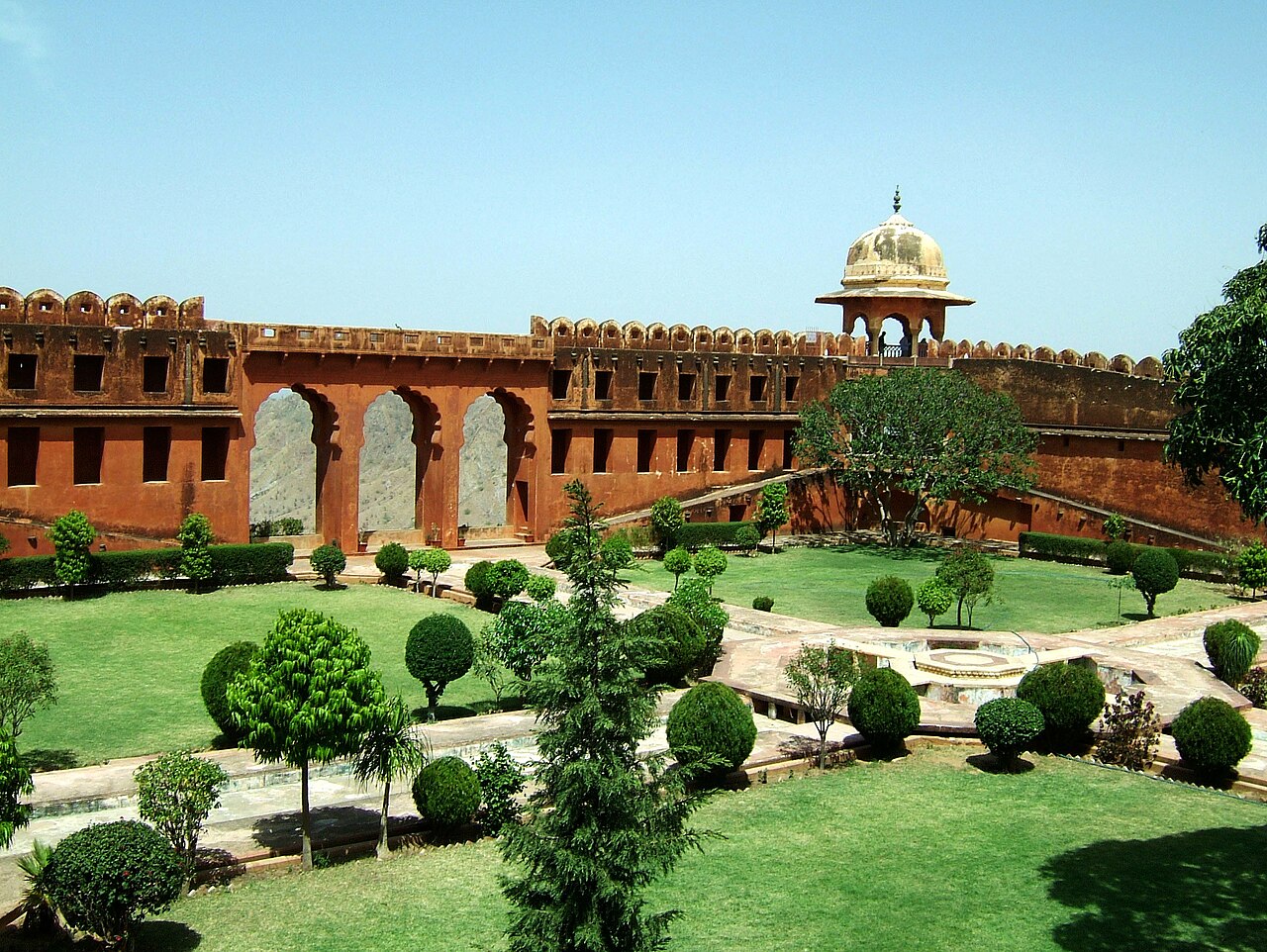
Jaigarh Fort is a fort in Jaipur, India. Built in 1726 by Maharaja Sawai Jai Singh. Never conquered in nearly three centuries of history. Most visitors spend 1-2 hours here. The free Lokali audio guide runs 6 minutes.
✓ Verified October 2026 · how we write these guides
Visitor facts
| Time needed | 1-2 hours |
|---|---|
| Lokali audio guide | 6 min · free |
| Type | Fort |
| Best for | History |
| Location | Jaipur, India |
| Coordinates | 26.983, 75.8472 |
| Languages | 45, in the Lokali app |
The story
The wind here carries the scent of dry earth and wild grass, and beneath your feet the stone walkway feels warm even through your shoes. You are standing inside Jaigarh Fort, perched on the spine of the Aravalli Hills, seven hundred feet above the city of Jaipur. The ramparts stretch away in both directions, following the natural ridgeline, and from where you stand the view opens onto a landscape of scrubby hills and distant plains that seem to shimmer in the heat.
Jaigarh was built in 1726 by Maharaja Sawai Jai Singh the Second, the same ruler who founded Jaipur itself. He designed this fort not as a palace but as a military stronghold, a place to store weapons and protect the royal treasury. The name means Victory Fort, and it was never conquered — not once in nearly three centuries. That record owes much to the terrain: attackers would have had to climb steep slopes under fire from these walls, and the fort's water reservoirs meant the garrison could outlast any siege.
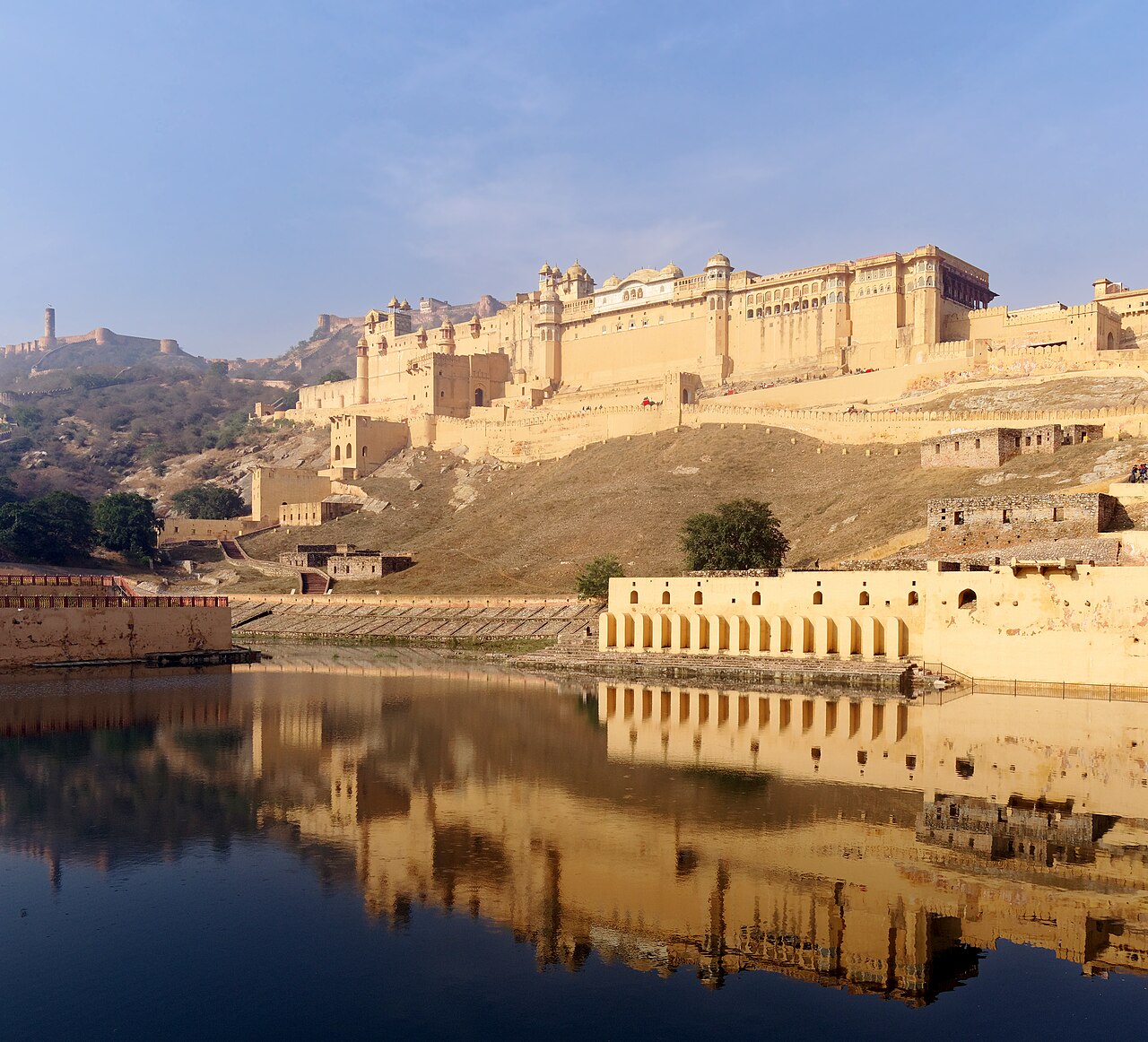
The fort is built from the same red sandstone as Amber Fort below, but where Amber is ornate and layered with Mughal decoration, Jaigarh is spare and functional. The walls are thick, the courtyards wide, the watchtowers positioned to cover every approach. Walk through the complex and you notice the absence of carved screens and painted ceilings — this was a working fortress, not a showpiece. The architects prioritized sightlines and storage over beauty.
At the heart of the fort stands the Jaivana cannon, cast in 1720 in the foundry here on site. It is the largest wheeled cannon ever made, weighing fifty tons, its barrel twenty feet long. The foundry workers used a mix of iron, copper, and brass, and the casting required such precision that they could only attempt it once. The cannon was test-fired a single time — the ball traveled 2002 miles and landed in a reservoir near the town of Chaksu. After that, Jai Singh ordered it never fired again, fearing the recoil would crack the fort's foundations.
The fort's water system is a marvel of engineering that often goes unnoticed. Rainwater was channeled from the surrounding hills into three large tanks, each lined with lime plaster to prevent seepage. The largest tank holds six million gallons. Even in the driest months, these reservoirs kept the garrison supplied, and the system still functions today. You can see the channels cut into the stone, angling toward the tanks, a network designed with the same care as the battlements.
Jaigarh and Amber Fort are connected by underground passages, though most are sealed now. The two forts worked as a pair: Amber was the royal residence, visible and accessible, while Jaigarh held the armory and treasury, hidden on the heights. When danger approached, the royal family could retreat uphill through the tunnels, and the defenders could rain cannon fire down on anyone trying to follow. This dual structure — one fort for display, one for defense — was Jai Singh's innovation.
The armory museum inside the fort holds swords, muskets, and powder horns, but the most striking pieces are the chain mail suits, each woven from thousands of tiny iron rings. A full suit weighs forty pounds. Soldiers wore them under their tunics in battle, and you can see the rust stains where sweat soaked through the fabric. The craftsmanship is meticulous — each ring interlocks with four others, and the pattern flexes like cloth.
The watchtowers offer the best views, but they also reveal the fort's strategic logic. From the highest tower you can see Amber Fort directly below, the Maota Lake beside it, and the road that winds up from Jaipur. Any army approaching the capital would have been visible from here hours before arrival, giving the defenders time to prepare. On a clear day you can see the walls of Nahargarh Fort on the opposite ridge, the third point in Jaipur's defensive triangle.
The fort is quieter than Amber, and that is part of its appeal. Fewer tourists make the climb, so the courtyards feel open and the stone corridors echo with your footsteps. In the late afternoon the light turns golden and the shadows lengthen across the ramparts, and you can walk the perimeter wall with only the wind and the occasional hawk for company.
As you leave, look back at the cannon one more time. It has sat silent for three hundred years, aimed at nothing, a weapon too powerful to use. The irony is not lost on the guides here — they will tell you that Jaigarh's greatest strength was never needing to prove itself. The fort stands intact, unbreached, a monument to deterrence rather than destruction. The hills around it are still wild, the stone still warm, and the view still commands the valley as it did when Jai Singh first walked these walls.
Key facts
What to look for
Practical tips
Common questions
How long do you need at Jaigarh Fort?
Plan 1-2 hours. That is the time most visitors spend at Jaigarh Fort. The free Lokali audio guide runs 6 minutes and is made to listen to while you walk.
Is there a free audio guide to Jaigarh Fort?
Yes — the Lokali app narrates Jaigarh Fort free of charge in 50+ languages. No ticket, tour group or subscription, and it works offline once downloaded.
Where is Jaigarh Fort?
Jaigarh Fort is in Jaipur, India, at 26.983, 75.8472. Tap the map link on this page for directions.
What should you know before visiting Jaigarh Fort?
Visit late afternoon for softer light and smaller crowds
What is Jaigarh Fort known for?
Built in 1726 by Maharaja Sawai Jai Singh
What is the best time to visit Jaigarh Fort?
Visit late afternoon for softer light and smaller crowds
On the map
Opens directions to Jaigarh Fort from your location.
More to see in Jaipur


Hear Jaigarh Fort in your language
The full story, narrated, in 50+ languages. Download it before you go and it plays offline, at your own pace, with no ticket and no tour group.