
Bala Hissar, Kabul
34.5056° N · 69.1917° E · Fortification
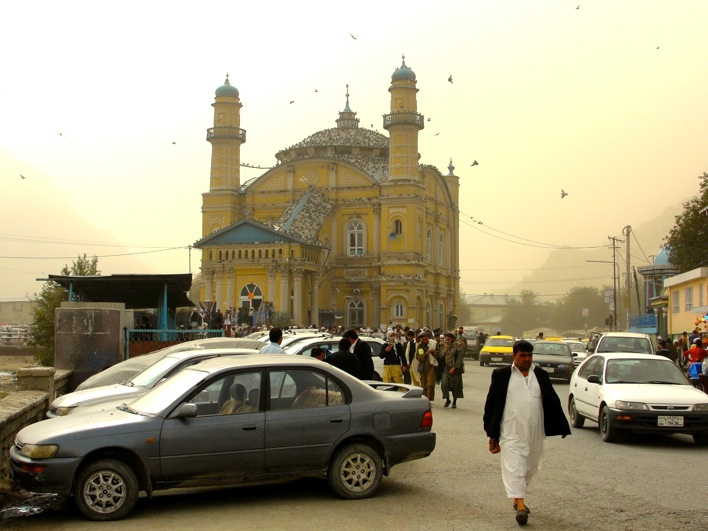
Photo: AhmadElhan · CC BY-SA 4.0 · Wikimedia Commons
Bala Hissar, Kabul is a fort in Kabul, Afghanistan. Bala Hissar means high fort in Persian. The free Lokali audio guide runs 6 minutes.
✓ Published October 2026 · how we write these guides
Visitor facts
| Lokali audio guide | 6 min · free |
|---|---|
| Type | Fortification |
| Location | Kabul, Afghanistan |
| Coordinates | 34.5056, 69.1917 |
| Languages | 50+, in the Lokali app |
The story
Start with the ground under your feet. It is dry, pale, and packed hard, with small stones that shift as you walk. The air here often carries fine dust, and on a clear day it catches the light in a soft haze. Lift your eyes, and the slope climbs away from you towards a ridge of brown rock. Along that ridge, if you look carefully, a broken line of old wall follows the mountain's spine.
This is Bala Hissar, the old fortress of Kabul. The name comes from Persian. Bala means high or upper, and hissar means fort or enclosure. So the name is simple: the high fort. For many centuries, this was the place from which Kabul was watched, defended, and ruled. Today it is quieter, damaged, and partly closed, but it still holds the city's longest memory.
The fortress sits on the southern edge of the old city. Behind it rises the mountain known as Sher Darwaza, which means the Lion's Gate. The site makes sense the moment you see it. A fort here could see the valley below, the roads coming in, and the river crossing the city. Whoever held this high ground held a strong hand over Kabul itself.
Historians agree that people fortified this spot a very long time ago. The exact beginning is not certain, and different traditions give different early dates. What is clear is that the location was used again and again. Each new power repaired the walls, built on old foundations, and added its own rooms and gates. The fort you see is not one building from one moment. It is many layers stacked on top of each other.
Traditionally, the fortress had two main parts. There was a lower fort, closer to the city, and an upper fort, higher on the slope. The lower part held living quarters, stores, and space for soldiers and servants. The upper part was the true stronghold, the final place to retreat if an enemy broke through. Imagine the noise of the lower fort on a busy day... horses, cooking fires, voices in several languages, all inside these walls.
Kabul has always been a crossroads. Traders, armies, and pilgrims passed through these valleys between Central Asia and the plains of India. Babur, the founder of the Mughal dynasty, took Kabul in the early sixteenth century. He wrote fondly of the city in his memoirs, and he loved its gardens and its climate. Rulers after him, Mughal and later Afghan, used the fortress as a seat of power and a royal residence.
In the eighteenth century, the Durrani rulers of Afghanistan made Kabul their capital. Timur Shah moved the court here from Kandahar in the 1770s. From then on, the high fort sat close to the centre of Afghan political life. Palaces, audience halls, and government rooms stood within its walls. Here is something many visitors miss: for a long time, this fortress was not just a military post. It was also a home, with courtyards, gardens, and family quarters.
The nineteenth century brought darker years. During the Anglo-Afghan wars, British forces came to Kabul more than once. In 1879, a British mission was living inside the fortress grounds. That year, the British envoy, Sir Louis Cavagnari, and his escort were killed during an uprising. In response, British troops under General Frederick Roberts returned to the city. Afterwards, large parts of the fortress were deliberately damaged. Much of what once stood here was lost in that period.
In the twentieth century, the site stayed in military hands. The Afghan army used it, and for long periods ordinary people could not walk freely inside. Then came the civil war of the 1990s. Kabul suffered heavy fighting, and the high ground around Bala Hissar was valuable to every side. The walls took new damage from shells and gunfire. Some scars you may notice today are very recent compared to the age of the stones.
Now look closely at the walls themselves. Much of the construction is mud brick and packed earth, the same warm colour as the hills around you. This is a traditional building method across the region. It is cheap, strong, and good at holding heat in winter and coolness in summer. But it also wears away with rain, wind, and time. Where the surface has fallen, you can sometimes see the layered earth and brick inside.
Here is a second detail worth your attention. Follow the line of old wall as it climbs Sher Darwaza and runs along the ridge. These are the old city walls of Kabul, and they connect with the fortress below. Seen together, they show how the whole city was once wrapped in a defensive ring. Standing here, you are not looking at a single castle. You are looking at the anchor point of an entire walled city.
Today, access to Bala Hissar can be limited, and conditions change. Parts of the site have been used for military purposes, and some areas may be closed. In recent years, there has been interest in studying and protecting the fortress, but the work is slow and the site remains fragile. If you can approach, move with care. Respect any guards, signs, or fences. And ask before you take photographs, especially of people or anything that looks official.
Take a moment before you leave. Turn and look back down towards the city. Listen to the sounds that rise from below... traffic, a call to prayer from a distant mosque, voices from a nearby street. Then look again at the brown walls behind you, quiet now in the dust and light. Rulers came and went from this hill. The mountain and the city stayed. As you walk away, notice how often the old wall on the ridge appears above the rooftops, still watching over Kabul.
Key facts
What to look for
Practical tips
Common questions
Is there a free audio guide to Bala Hissar, Kabul?
Yes — the Lokali app narrates Bala Hissar, Kabul free of charge in 50+ languages. The guide runs about 6 minutes, covers the history, what to look for on site and practical tips, and works offline once downloaded.
Where is Bala Hissar, Kabul?
Bala Hissar, Kabul is in Kabul, Afghanistan, at 34.5056, 69.1917. Tap the map link on this page for directions from where you are.
What is Bala Hissar, Kabul known for?
Bala Hissar means high fort in Persian. Fortress sits below Sher Darwaza, the Lion's Gate mountain.
What should you look for at Bala Hissar, Kabul?
Old city walls running along the Sher Darwaza ridge. Exposed mud brick layers where wall surfaces have fallen. Recent shell and bullet scars on older stonework.
What should you know before visiting Bala Hissar, Kabul?
Check current access before going, as areas may be closed. Ask permission before photographing guards or official buildings.
On the map
Opens directions to Bala Hissar, Kabul from your location.
More to see in Kabul


Hear Bala Hissar, Kabul in your language
The full story, narrated, in 50+ languages. Download it before you go and it plays offline, at your own pace, with no ticket and no tour group.