
Great Mosque of al-Nuri, Mosul
36.3432° N · 43.1269° E · Mosque
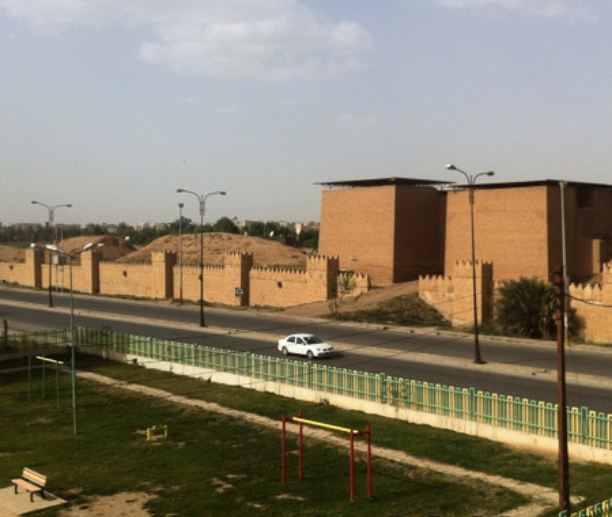
Photo: Ennolenze · CC BY-SA 4.0 · Wikimedia Commons
Great Mosque of al-Nuri, Mosul is a mosque in Iraq. Named after Nur al-Din Zangi, a twelfth-century ruler. The free Lokali audio guide runs 7 minutes.
✓ Published October 2026 · how we write these guides
Visitor facts
| Lokali audio guide | 7 min · free |
|---|---|
| Type | Mosque |
| Location | Mosul, Iraq |
| Coordinates | 36.3432, 43.1269 |
| Languages | 50+, in the Lokali app |
The story
Listen for a moment. Footsteps cross the courtyard stone. A breeze moves off the Tigris, and somewhere in the old city a cart rattles over broken paving. Above you rises a brick tower that does not stand quite straight. It leans, gently, like a person stooping to hear something. That lean has a name in Mosul. People call the tower al-Hadba, the hunchback, and they have loved it for centuries.
You are standing in the heart of Mosul's old city, on the west bank of the Tigris River. This is the Great Mosque of al-Nuri. For generations it was the spiritual centre of the city. It was also its most familiar landmark. Travellers coming across the plain saw the leaning minaret long before they saw anything else. For Mosul's families, it simply meant home.
The mosque takes its name from Nur al-Din Zangi, a powerful ruler of the twelfth century. He controlled a large territory across what is now Syria and northern Iraq. He was known as a builder of mosques, schools and hospitals. The mosque was completed around 1172, near the end of his life. His name, Nur al-Din, means the light of the faith. So the mosque of al-Nuri is, quite literally, the mosque of light.
Now look up at the minaret again. Its shaft is made of baked brick, the warm, sandy colour of the land around Mosul. Notice the bands that wrap around it. The builders laid the bricks in raised geometric patterns — diamonds, interlocking lines and lattices. Nothing here is painted. All of the decoration comes from the way each brick sits against its neighbour. As the sun moves, shadows shift across these patterns, and the tower seems to change texture through the day.
Why does it lean? Here is the first surprise. Nobody is entirely certain. One popular legend says the minaret bowed toward the Prophet Muhammad as he ascended to heaven. Locals still tell that story with real affection. Engineers offer plainer explanations — strong prevailing winds, and the sun heating one side of the brick more than the other over many years. Weak foundations and gypsum mortar may also have played a part.
The prayer hall you see beside the minaret is not the original twelfth-century hall. Over the centuries the mosque was repaired, altered and rebuilt more than once. A major rebuilding took place in the twentieth century. Through all those changes, the minaret stayed. It became the one fixed point in a building that kept changing around it. That is part of why the people of Mosul felt so attached to it.
The tower even travelled far beyond the city. For many years, an image of al-Hadba appeared on Iraqi banknotes. So millions of people across the country carried this minaret in their pockets. Most of them never came to Mosul. Yet they knew the shape of this crooked tower as well as they knew their own streets.
Then came the hardest chapter. In 2014, the militant group known as the Islamic State took control of Mosul. In July of that year, its leader, Abu Bakr al-Baghdadi, appeared in this mosque. He climbed the pulpit and announced the so-called caliphate. It was his first public appearance, and the footage spread around the world. Overnight, a place of prayer became linked to a violent group that many in the city rejected.
Three years later, during the battle to retake Mosul in June 2017, the mosque and its minaret were destroyed by explosives. Iraqi forces were closing in on the old city at the time. Iraqi and coalition officials said the militants blew up the site themselves. The group blamed an air strike. For the people of Mosul, the loss was deeply personal. Many said that losing the minaret felt like losing a member of the family.
What stands before you now is the result of a long recovery. In 2018, UNESCO launched an initiative called Revive the Spirit of Mosul, with major funding from the United Arab Emirates. The plan covered this mosque and also two churches in the old city. Here is the second surprise. Before any building could begin, specialist teams had to clear the rubble of unexploded devices. Workers also sorted through the debris by hand, saving original bricks to reuse.
An international architecture competition helped shape the new prayer hall and the spaces around it. The minaret, however, was rebuilt to look as it did before. And the builders made one important choice. They kept the lean. A straight tower would have been easier to build. But a straight tower would not be al-Hadba. The rebuilt complex reopened in 2025, and once again the call to prayer carries across the rooftops of the old city.
As you walk around, look closely at the brick. Some surfaces are new and very even. Others carry older bricks, rescued from the ruins, with slightly different colours and worn edges. Local craftsmen trained during the project to work with traditional methods. In a sense, this building is also a school. A new generation of Mosul's builders learned their trade here, brick by brick, while repairing their own city.
The streets around the mosque are still recovering too. You may see fresh plaster beside scarred walls, new doors beside empty plots. Shops and families have returned slowly. Life comes back in small sounds — children's voices, a shop shutter rolling up, tea glasses on a tray. The mosque is not a museum set apart from all this. It sits in the middle of a neighbourhood that is rebuilding itself.
Before you leave, stand back once more and take in the whole tower. Notice the angle of the lean against the sky. Notice the patterns climbing toward the top. This minaret has been built, damaged, repaired, destroyed and raised again. And it still tilts, just slightly, as if listening. As you walk away through the lanes of the old city, glance back. Mosul's hunchback is watching over its streets once more.
Key facts
What to look for
Practical tips
Common questions
Is there a free audio guide to Great Mosque of al-Nuri, Mosul?
Yes — the Lokali app narrates Great Mosque of al-Nuri, Mosul free of charge in 50+ languages. The guide runs about 7 minutes, covers the history, what to look for on site and practical tips, and works offline once downloaded.
Where is Great Mosque of al-Nuri, Mosul?
Great Mosque of al-Nuri, Mosul is in Mosul, Iraq, at 36.3432, 43.1269. Tap the map link on this page for directions from where you are.
What is Great Mosque of al-Nuri, Mosul known for?
Named after Nur al-Din Zangi, a twelfth-century ruler. Completed around 1172, near the end of Nur al-Din's life.
What should you look for at Great Mosque of al-Nuri, Mosul?
Raised geometric patterns formed purely from laid brick. The minaret's gentle tilt against the open sky. Older reused bricks with worn edges and different tones.
What should you know before visiting Great Mosque of al-Nuri, Mosul?
Dress modestly; women should bring a headscarf to enter. Visit between prayers so you do not disturb worshippers.
On the map
Opens directions to Great Mosque of al-Nuri, Mosul from your location.
More to see in Mosul



Hear Great Mosque of al-Nuri, Mosul in your language
The full story, narrated, in 50+ languages. Download it before you go and it plays offline, at your own pace, with no ticket and no tour group.