
Monastery of Saint Elijah
36.2924° N · 43.1310° E · Monastery
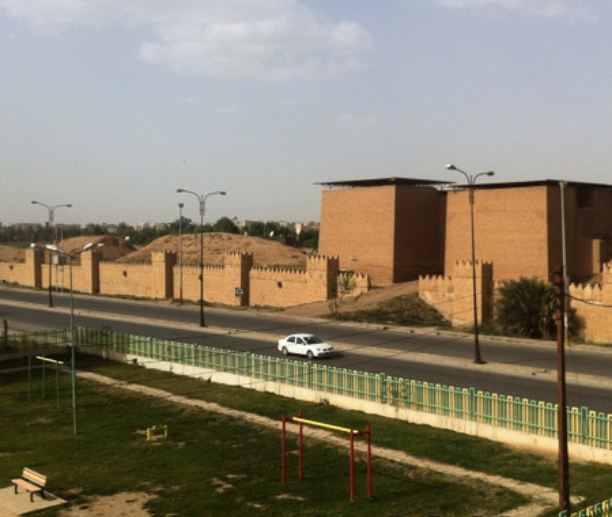
Photo: Doug · CC BY-SA 4.0 · Wikimedia Commons
Monastery of Saint Elijah is an abandoned Christian monastery in Iraq. Tradition dates the monastery's founding to the late sixth century. The free Lokali audio guide runs 7 minutes.
✓ Published October 2026 · how we write these guides
Visitor facts
| Lokali audio guide | 7 min · free |
|---|---|
| Type | Monastery |
| Location | Mosul, Iraq |
| Coordinates | 36.2924, 43.1310 |
| Languages | 50+, in the Lokali app |
The story
Feel the ground under your shoes first. It is dry, pale and uneven, with chips of stone mixed into the dust. A warm wind comes across the open land south of Mosul. It carries the smell of earth and, sometimes, distant traffic. In front of you there are no walls to frame the view. There is a low field of broken limestone and mud brick. This is what remains of the Monastery of Saint Elijah, for many centuries one of the oldest Christian houses of prayer in Iraq.
To understand why people still come here, start with the name. In Arabic the place is often called Dair Mar Elia. Dair means monastery, and Mar is a Syriac title of respect used for saints and bishops. Syriac is a form of Aramaic, the language spoken across this region in the early Christian centuries. Tradition holds that a monk named Elijah founded the community near the end of the sixth century. He belonged to the Church of the East, an ancient Christian church centred in Mesopotamia.
Picture the setting as it was. Mosul sits on the Tigris River, across the water from the ruins of ancient Nineveh. For centuries this was a meeting point of Arab, Kurdish, Assyrian, Armenian and Turkish communities. Monks here lived a quiet life of prayer, work and study. Monasteries in this region often kept manuscripts, taught young people to read, and gave shelter to travellers. Exact details of daily life at this house are not well recorded, so it is honest to say we know its outline better than its everyday rhythm.
What we do know is the shape the building took in its later centuries. It was built largely of local stone and mud brick, with heavy walls that kept out the summer heat. There was a chapel with a sanctuary, a series of small rooms for the monks, and courtyards open to the sky. Visitors before the destruction described a carved stone doorway. Above it was a Christian symbol formed from the first Greek letters of the name of Christ, the Chi and the Rho.
Now the first surprise. The worst tragedy in the monastery's story did not happen in modern times. Accounts from the community say that in the mid-eighteenth century, during an invasion by the Persian ruler Nader Shah, the monks were given a choice. They could abandon their faith or die. According to these accounts, they refused, and many of them were killed. The numbers vary between sources, so treat them with care. But for local Christians, this memory turned the site into a place of martyrs.
After that, the monastery stood largely empty for a long time. Its walls weathered under the sun. Its rooms filled slowly with sand and fallen stone. Yet it was never fully forgotten. Local Christians, especially from the Chaldean Catholic Church, continued to treat it as a holy place. The Chaldean Church is an Eastern church that shares many traditions with the old Church of the East but is in communion with Rome. Families came on feast days to pray and to light candles among the ruins.
The twentieth century brought a strange neighbour. The land around the monastery became part of a military area used by the Iraqi army. So the ancient walls stood inside a modern base. Then, in 2003, during the American-led invasion of Iraq, United States troops took control of the area. During the fighting, the old building was damaged. Some soldiers also left graffiti on the walls, which later caused real regret among those who understood the site's value.
Here is the second surprise. Some of those same soldiers became the monastery's protectors. American military chaplains learned the history of the place and held services inside it. Army engineers and archaeologists worked to clean the graffiti and stabilise parts of the structure. Soldiers were brought here for tours, so they could understand where they were standing. For a few years, an ancient Iraqi monastery was studied and cared for by people who had arrived as an invading force.
Then came the darkest chapter. In 2014, the extremist group known as the Islamic State captured Mosul. The group targeted churches, shrines and ancient monuments across the region. In early 2016, satellite images confirmed what many had feared. The monastery had been levelled. Walls that had stood for centuries were gone, reduced to the field of rubble around you now. Investigators believe the destruction happened soon after the group took the city.
Mosul was retaken in 2017, after a long and costly battle. The city that emerged was badly wounded. Whole districts of the old town lay in ruins, and many families had fled. Since then, there has been slow and patient rebuilding across Mosul, of homes, mosques and churches alike. Christians have returned in small numbers. Some have come back to this hill to pray among the stones, keeping alive a habit that is much older than any of the damage.
As you stand here, look closely at the ground rather than the horizon. You will see the difference between cut stone and mud brick. The cut stone has flat faces and sharp edges. The mud brick has softened and crumbled, almost returning to soil. Here and there, fragments of plaster still hold a trace of their old surface. This is the physical record of the building. Each layer shows a different moment: original building, centuries of repair, and finally sudden destruction.
It is worth remembering that this is not a museum with labels and railings. Access may depend on the current security situation and on permission from local authorities. Move slowly and keep to clear paths. Do not take stones or fragments as souvenirs, even small ones. For the local Christian community this is still sacred ground. Many of them see the field of rubble not only as a loss but as a place where their ancestors prayed and, according to tradition, died for their faith.
Before you leave, stand still for a moment and listen. You may hear wind across the open land, a dog in the distance, a car on a road you cannot see. Fourteen centuries of prayer happened on this patch of ground. Most of the walls are gone, but the place itself is still here. As you walk back toward the city, look at the pale dust on your shoes. It is the same earth the first monks walked on, and it is still part of Mosul.
Key facts
What to look for
Practical tips
Common questions
Is there a free audio guide to Monastery of Saint Elijah?
Yes — the Lokali app narrates Monastery of Saint Elijah free of charge in 50+ languages. The guide runs about 7 minutes, covers the history, what to look for on site and practical tips, and works offline once downloaded.
Where is Monastery of Saint Elijah?
Monastery of Saint Elijah is near Mosul, Iraq, at 36.2924, 43.1310. Tap the map link on this page for directions from where you are.
What is Monastery of Saint Elijah known for?
Tradition dates the monastery's founding to the late sixth century. Founded by a monk named Elijah of the Church of the East.
What should you look for at Monastery of Saint Elijah?
Flat-faced cut limestone mixed with crumbling mud brick. Fragments of old plaster still clinging to some stones. The open view south across the plain toward the river.
What should you know before visiting Monastery of Saint Elijah?
Check current security conditions before planning any visit. Arrange access through local authorities or an experienced local guide.
On the map
Opens directions to Monastery of Saint Elijah from your location.
More to see in Mosul


Hear Monastery of Saint Elijah in your language
The full story, narrated, in 50+ languages. Download it before you go and it plays offline, at your own pace, with no ticket and no tour group.