
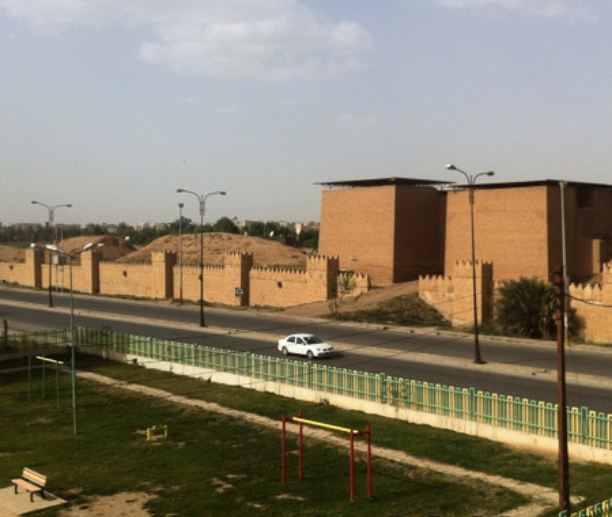
Photo: Levi Clancy · CC0 · Wikimedia Commons
Mosul Museum is an archaeological museum in Mosul, Iraq. Second-largest museum in Iraq after Baghdad's National Museum. The free Lokali audio guide runs 7 minutes.
✓ Published October 2026 · how we write these guides
Visitor facts
| Lokali audio guide | 7 min · free |
|---|---|
| Type | Museum |
| Location | Mosul, Iraq |
| Coordinates | 36.3379, 43.1394 |
| Languages | 50+, in the Lokali app |
The story
Stand still for a moment and listen. Traffic hums along the streets of Mosul, a car horn sounds, voices rise and fall nearby. In front of you is a modern building of concrete and stone, plain and almost severe. It does not look like a treasure house. Yet for decades this museum held some of the oldest carved images ever made in this part of the world. Its story runs from the age of Assyrian kings to the past few years.
The Mosul Museum is the second-largest museum in Iraq. Only the National Museum in Baghdad is bigger. It began in the early 1950s in a much smaller space. In the 1970s the collection moved into the purpose-built home you see now. Its job was simple and enormous. It had to show the people of northern Iraq what lay buried under their own fields and hills, often just a short drive away.
That is the first surprise for many visitors. Most of this collection did not travel far to get here. Look east across the Tigris River. On the far bank lie the remains of Nineveh, once the capital of the Assyrian Empire. Assyria was a powerful Mesopotamian state that dominated much of the Near East nearly three thousand years ago. Mosul grew up facing those ruins. In a very real sense, this museum stands across the water from its own collection.
To the south lies Nimrud, another Assyrian royal city. Further southwest is Hatra, a fortified desert city from the time of the Parthians. The Parthians were a dynasty based in Iran who ruled a large empire about two thousand years ago. Hatra stood on the edge of their world and the Roman world. Objects from all three sites came to these halls. Together they told a long story of power, worship, and trade in northern Mesopotamia.
The Assyrian hall was the heart of the museum. Here stood stone reliefs, flat slabs carved with kings, soldiers, servants, and winged spirits. Assyrian kings lined their palace walls with images like these. The figures have curled beards, heavy bracelets, and muscles carved in strong ridges. Some carry cuneiform inscriptions, the wedge-shaped writing of ancient Mesopotamia. These panels were made to impress foreign visitors and frighten enemies. They still have that weight today.
The museum also held guardian figures called lamassu. A lamassu has the body of a bull or lion, great wings, and a human head with a tall crown. Assyrians placed them at palace gateways for protection. Look closely at one, if you see any in a photograph or replica. Many have five legs. From the front, the creature stands still. From the side, it walks forward. The sculptors wanted it to look right from both angles.
The Hatra hall felt very different. The statues from Hatra are standing figures of kings, nobles, and gods. They wear long tunics with deep folds, and some raise a right hand in greeting or prayer. Their faces mix local style with Greek and Roman influence. That mix tells you something about Hatra itself. It was a crossroads city, where caravans, armies, and religions met in the open desert.
Now the story turns darker. In 2003, during the chaos after the invasion of Iraq, the museum suffered looting. Then, in June 2014, the extremist group known as ISIS seized Mosul. In early 2015 the group released a video filmed inside these halls. Men with sledgehammers and drills attacked statues and toppled them from their bases. The images shocked people around the world. For many, it was the first time they had heard of this museum at all.
Here is a detail that many people miss. Some of the statues smashed in that video were not originals. They were plaster copies. Staff and archaeologists had moved some of the most valuable objects to Baghdad years earlier, for safekeeping. This does not reduce the loss. Many genuine ancient pieces were destroyed or damaged, and others were stolen. But the work of earlier curators saved part of this heritage before anyone knew the danger.
The second surprise is in the floor. In the Assyrian hall, militants used explosives on the great stone platform of a royal throne from Nimrud. The blast left a deep crater in the gallery floor. When Mosul was retaken in 2017, the building had broken windows, damaged walls, and that hole. Restorers chose to study the crater carefully. It became part of the record of what happened here, not only something to fill in.
After the battle, the museum became a project of recovery. Iraqi heritage staff worked with international partners, including the Louvre in Paris, the Smithsonian in Washington, the World Monuments Fund, and a heritage alliance called ALIPH. Teams gathered fragments, sorted them, and began the slow work of rebuilding both objects and building. Some broken statues were pieced back together from hundreds of shards. This work takes years, and it moves at the speed of patience.
The museum's status has changed several times since then. Parts of the building have hosted exhibitions and events, while restoration continued in other areas. Before you visit, ask locally or check recent news about which halls are open. Whatever you find inside, the building itself matters. It is one of the clearest places in Iraq to understand both the age of this land and the cost of war on memory.
Mosul is often called a city of many communities. Arabs, Kurds, Assyrian Christians, Yazidis, Turkmen, and others have lived in this region for centuries. The objects in this museum belong to all of them, and to no single group. When local people speak about the museum's return, many speak with pride. For them, rebuilding these halls is part of rebuilding a normal life in their city.
Before you walk on, look again at the building in front of you. Notice the repairs, the new surfaces next to old ones, the places where work is still unfinished. Then turn toward the river and think of Nineveh on the far bank. Three thousand years of history lie within a few kilometres of where you stand. As you leave, listen to the city around you... still here, still busy, still making its own story.
Key facts
What to look for
Practical tips
Common questions
Is there a free audio guide to Mosul Museum?
Yes — the Lokali app narrates Mosul Museum free of charge in 50+ languages. The guide runs about 7 minutes, covers the history, what to look for on site and practical tips, and works offline once downloaded.
Where is Mosul Museum?
Mosul Museum is in Mosul, Iraq, at 36.3379, 43.1394. Tap the map link on this page for directions from where you are.
What is Mosul Museum known for?
Second-largest museum in Iraq after Baghdad's National Museum. Collection began in the early 1950s.
What should you look for at Mosul Museum?
Repaired surfaces sitting beside older original wall finishes. The crater left by explosives in the Assyrian hall. Five-legged lamassu designed for front and side views.
What should you know before visiting Mosul Museum?
Check recent news on which halls are open before going. Combine your visit with the Nineveh ruins across the Tigris.
On the map
Opens directions to Mosul Museum from your location.
More to see in Mosul



Hear Mosul Museum in your language
The full story, narrated, in 50+ languages. Download it before you go and it plays offline, at your own pace, with no ticket and no tour group.