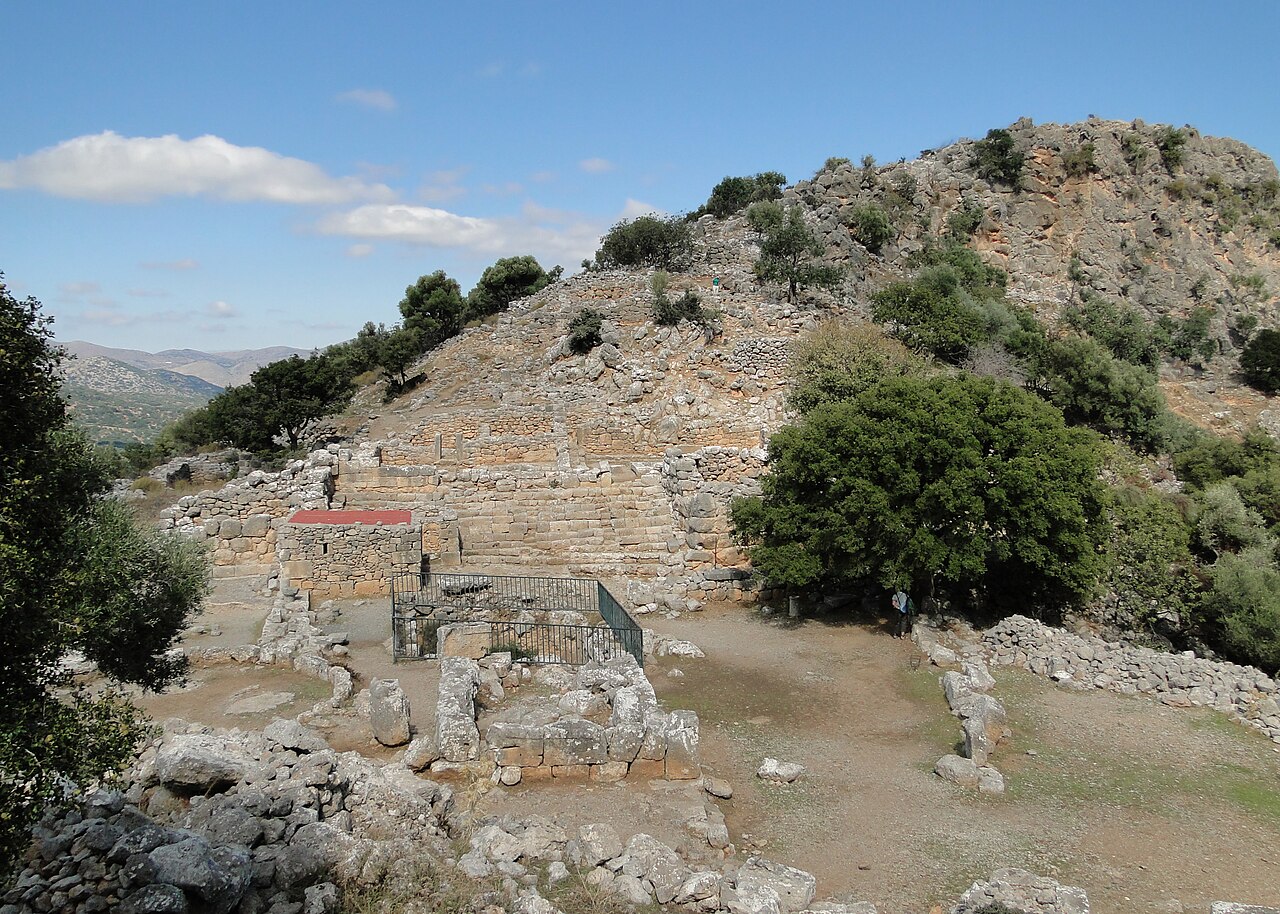
Lato Archaeological Site
35.2256° N · 25.4672° E · Archaeological Site
Lato Archaeological Site is an archaeological site in Crete, Greece. Ruins of a Dorian city perched on a ridge near Kritsa, dating to the 7th century BCE. Most visitors spend 45–75 min here. The free Lokali audio guide runs 8 minutes.
✓ Verified August 2026 · how we write these guides
Visitor facts
| Time needed | 45–75 min |
|---|---|
| Lokali audio guide | 8 min · free |
| Type | Archaeological Site |
| Best for | History |
| Location | Crete, Greece |
| Coordinates | 35.2256, 25.4672 |
| Languages | 45, in the Lokali app |
The story
The wind moves differently up here. You are standing on a saddle of rock between two peaks in the hills of eastern Crete, fifteen kilometres inland from the Gulf of Mirabello. Below you, terraces of stone drop away into valleys where olive groves shimmer silver-green. The silence is nearly total — just wind, cicadas, and the occasional bleat of a goat somewhere on the hillside.
This is Lato, one of the most complete and least visited Classical Greek city-states on Crete. The settlement flourished from the seventh century before Christ through the Hellenistic period, roughly three hundred years before the common era. Unlike many ancient sites that lie buried under modern towns, Lato was abandoned in antiquity and never rebuilt. What you see today is the skeleton of an entire polis — the city-state — preserved in stone.
The name itself is ancient. Lato was named after the goddess Leto, mother of Apollo and Artemis, who according to myth gave birth to the twin deities on the nearby island of Delos. The city minted its own coins, conducted its own diplomacy, and controlled the coastal port of Lato pros Kamara — modern Agios Nikolaos — down by the sea. For centuries, this windswept ridge was a center of power.
Walk toward the agora, the central public square. The steps climbing up from the lower city are worn smooth by thousands of ancient feet. On your left, you will see the remains of a prytaneion — a civic building where magistrates met and sacred fires burned. The stone benches are still in place. Sit where a citizen might have sat twenty-four centuries ago, and you get a visceral sense of scale. These were not grand imperial monuments. This was a working city of perhaps two thousand people, built to human dimensions.
The defensive walls are what make Lato remarkable. They follow the natural contours of the ridge, massive polygonal blocks fitted together without mortar. Some stones weigh several tonnes. No one knows exactly how they were moved into place, though wooden rollers and sheer human labor are the likely answer. The walls were not merely functional — they were a statement. In a landscape of competing city-states, fortifications announced strength and permanence.
Climb higher, toward the northern acropolis. From this vantage, you can see why the site was chosen. The position is nearly impregnable — steep slopes on all sides, clear sightlines to the coast and the surrounding valleys, access to springs. Lato was built for survival in a world where conflict was constant. Yet it was also a place of culture. Archaeologists have found inscriptions, pottery, evidence of religious festivals and athletic games.
The city began to decline in the third century before Christ. Historians believe its port settlement — Lato pros Kamara — gradually eclipsed the hilltop town. Trade and commerce shifted to the coast, and the inland site lost its strategic importance. By the Roman period, Lato was deserted. The stones remained, slowly weathering under the Cretan sun.
French archaeologists began excavating here in the early twentieth century, and work continues sporadically. Much of the site remains unexcavated. You can still see the faint outlines of houses, streets, workshops — the texture of daily life. There are no ropes, no crowds, no ticket booths at the entrance. You are largely alone with the ruins.
Stand at the edge of the agora and look east toward the sea. On clear days, you can make out the blue line of the Gulf of Mirabello in the distance. Imagine the view from here at dawn, when the light first touches the peaks. The stones turn gold. The valleys fill with shadow. For a moment, it is not difficult to understand why the people of Lato chose this place — and why they stayed for so long.
Key facts
What to look for
Practical tips
Common questions
How long do you need at Lato Archaeological Site?
Plan 45–75 min. That is the time most visitors spend at Lato Archaeological Site. The free Lokali audio guide adds about 8 minutes of narration you can listen to as you walk, so it fits inside your visit rather than adding to it.
Is there a free audio guide to Lato Archaeological Site?
Yes — the Lokali app narrates Lato Archaeological Site free of charge in 50+ languages. It covers the history, what to look for on site and practical tips, and it works offline once downloaded.
Where is Lato Archaeological Site?
Lato Archaeological Site is in Crete, Greece, at 35.2256, 25.4672. Tap the map link on this page for directions from where you are.
What should you know before visiting Lato Archaeological Site?
Bring water and sun protection, no shade on site.
What is Lato Archaeological Site known for?
Named after the goddess Leto, mother of Apollo and Artemis.
What is the best time to visit Lato Archaeological Site?
The site is quiet and windswept.
On the map
Opens directions to Lato Archaeological Site from your location.
More to see in Crete


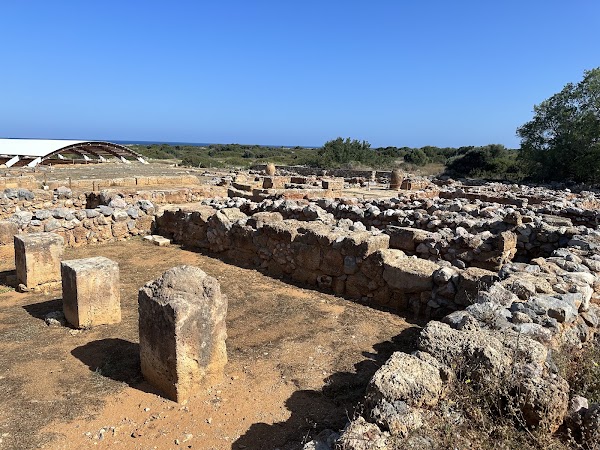

Hear Lato Archaeological Site in your language
The full story, narrated, in 50+ languages. Download it before you go and it plays offline, at your own pace, with no ticket and no tour group.