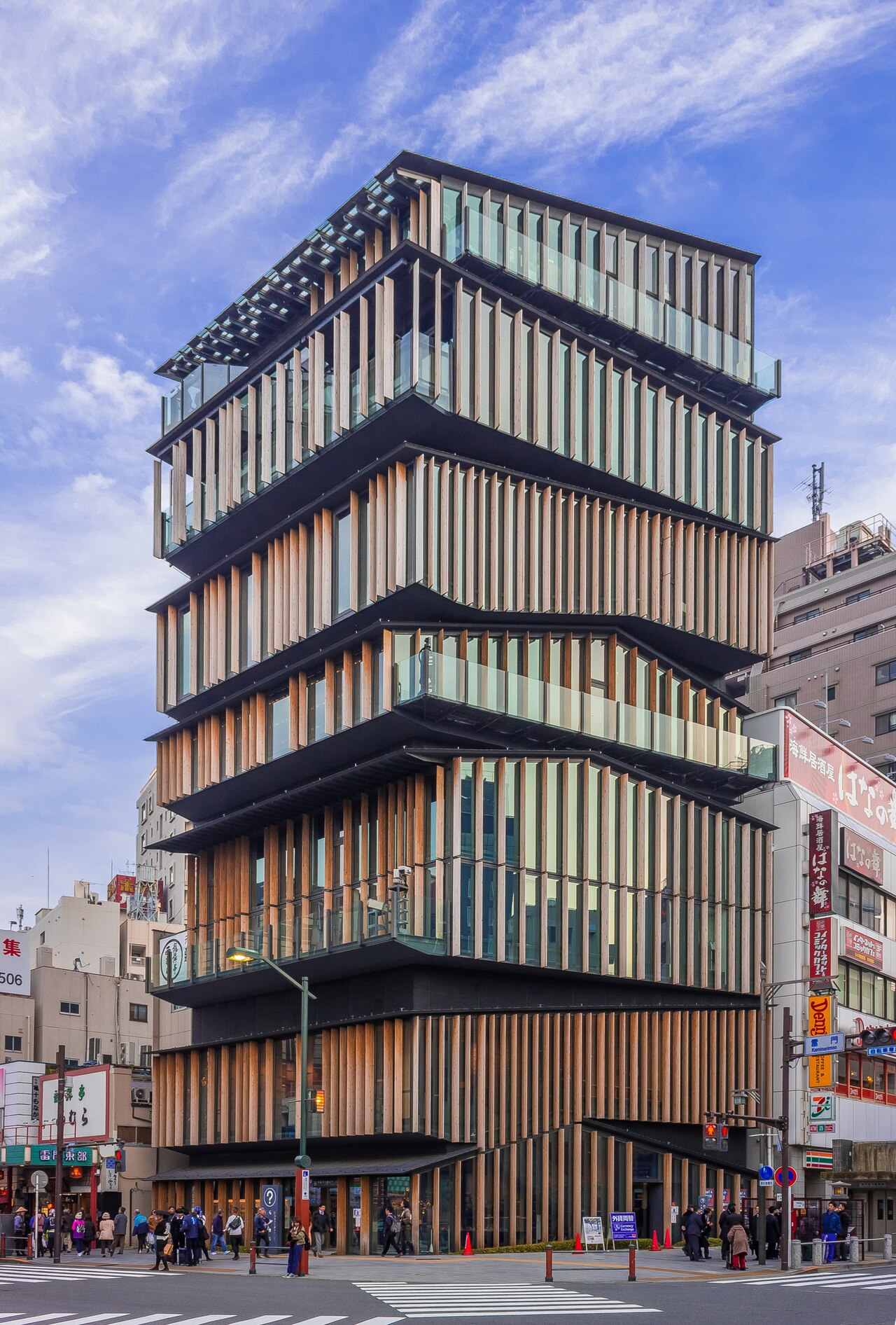
Asakusa Culture and Tourism Center
35.7100° N · 139.7948° E · Museum
Asakusa Culture and Tourism Center is a modern building offering free access to exhibits on Asakusa's history, traditional crafts, and seasonal festivals. It is in Taito, Japan. Most visitors spend 30–45 min here. The free Lokali audio guide runs 5 minutes.
✓ Verified August 2026 · how we write these guides
Visitor facts
| Time needed | 30–45 min |
|---|---|
| Lokali audio guide | 5 min · free |
| Type | Museum |
| Best for | Editors' pick |
| Location | Taito, Japan |
| Coordinates | 35.7100, 139.7948 |
| Languages | 45, in the Lokali app |
The story
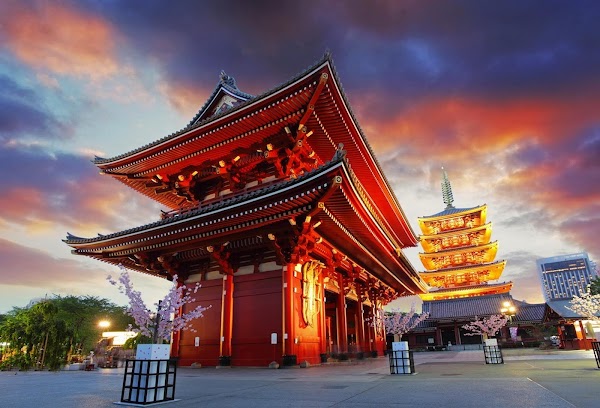
Stand at the great red gate and turn around. Most people never do. They face the temple and the giant lantern, cameras raised high. But behind you, across the busy street, rises a strange and clever building. Look up at it. It seems to be several small houses, stacked one on top of another, all the way into the sky.
This is the Asakusa Culture and Tourism Center. Its job is simple and practical. It helps visitors find their way around the district. But the building itself is worth a look, even before you step inside. It is one of the more surprising sights in the area, and many people miss it completely. Take a moment to study it before you go in.
It was designed by a well known architect named Kengo Kuma. He is known around the world for his use of wood and soft, natural lines. This center opened in 2012. From the outside, it looks like a pile of low wooden houses, each with its own slanted roof. But that is a kind of trick. In truth, it is one tall building of eight floors, dressed up to look like many small ones.
Why build it in such an odd way? The idea was respect. The old district around it is full of low, traditional houses. A tall glass tower would feel wrong here. It would loom over everything. So the architect broke the height into small pieces. Each floor wears the face of a single old house. The building stands tall, yet it still feels at home among its neighbors.
Go inside on the ground floor. Here you will find help of every kind. There are desks with staff who speak several languages. There are maps, pamphlets, and timetables. There are screens with information for travelers from all over the world. If you are lost, tired, or unsure where to go next, this is the place to start your visit. You can also buy tickets here for local sightseeing buses and river boats.
The upper floors hold other uses. There are rooms for events and meetings. There is a space for small exhibitions about local life and history. There is a quiet cafe where you can rest your feet. But the real reward, the thing most worth climbing for, waits at the very top of the building.
Take the elevator up to the eighth floor. There is an observation terrace there, and it costs nothing at all. You do not pay a single coin to enjoy one of the finest views in the whole district. Few visitors seem to know this. The deck is often calm and uncrowded.
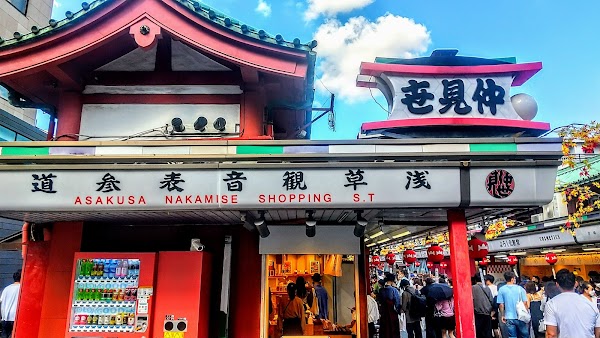
Step outside onto the deck and look down first. Directly below you runs the shopping street. It is a long, narrow lane, cutting straight toward the temple gates. From up here, you can finally see its full shape. You can watch the thick crowds moving slowly along it, like a slow river of people between the rooftops.
Now lift your eyes a little higher. There is the temple complex itself. The wide, sweeping roofs. The five-story pagoda standing tall beside the main hall. From down on the ground, you can never take it all in at once. There is always a wall or a crowd in the way. From here, the whole layout opens up cleanly before you.
Turn your gaze across the river. A huge tower rises far into the sky. It is the tall broadcasting tower that opened in the same year as this very center. By day, it is a pale frame of steel, sharp against the clouds. After dark, it glows and shifts with slowly changing light.
This view is one of the few places where old and new sit side by side in a single glance. The ancient temple just below you. The modern tower far beyond. And the narrow old street running between them, full of people, just as it has always been. Take a slow breath and let your eyes travel across all of it. Many visitors stay here longer than they planned, just watching the light change.
So before you dive down into the crowd, come up here first. Read the map on the wall. Find your direction. Then stand quietly at the glass and look out. Sometimes the best way to understand a place is to rise above it for a single moment, and see at last how all the small pieces fit together. The view will still be here when you come back down.
Key facts
What to look for
Practical tips
Common questions
How long do you need at Asakusa Culture and Tourism Center?
Plan 30–45 min. That is the time most visitors spend at Asakusa Culture and Tourism Center. The free Lokali audio guide adds about 5 minutes of narration you can listen to as you walk, so it fits inside your visit rather than adding to it.
Is there a free audio guide to Asakusa Culture and Tourism Center?
Yes — the Lokali app narrates Asakusa Culture and Tourism Center free of charge in 50+ languages. It covers the history, what to look for on site and practical tips, and it works offline once downloaded.
Where is Asakusa Culture and Tourism Center?
Asakusa Culture and Tourism Center is in Taito, Japan, at 35.7100, 139.7948. Tap the map link on this page for directions from where you are.
What should you know before visiting Asakusa Culture and Tourism Center?
Start here to pick up maps and directions.
What is Asakusa Culture and Tourism Center known for?
Designed by the architect Kengo Kuma.
What is the best time to visit Asakusa Culture and Tourism Center?
The rooftop observation deck is free and less crowded than paid viewpoints elsewhere in Tokyo.
On the map
Opens directions to Asakusa Culture and Tourism Center from your location.
Reference
More to see in Taito



Hear Asakusa Culture and Tourism Center in your language
The full story, narrated, in 50+ languages. Download it before you go and it plays offline, at your own pace, with no ticket and no tour group.