
Sensoji is the smell reaches you first — incense smoke rising in thick coils from the bronze cauldron, visitors wafting it over their shoulders, their heads, believing it carries healing. It is in Taito, Japan. The free Lokali audio guide runs 9 minutes.
✓ Verified August 2026 · how we write these guides
Visitor facts
| Lokali audio guide | 9 min · free |
|---|---|
| Location | Taito, Japan |
| Coordinates | 35.7148, 139.7967 |
| Languages | 45, in the Lokali app |
The story
The smell reaches you first — incense smoke rising in thick coils from the bronze cauldron, visitors wafting it over their shoulders, their heads, believing it carries healing. You are standing in the oldest temple precinct in Tokyo, a place that has drawn pilgrims for nearly fourteen centuries.
Sensoji was founded in the year 628, according to temple records, when two fishermen pulled a small golden statue of Kannon — the Buddhist deity of compassion — from the Sumida River. The statue was only five centimetres tall, but the brothers recognised something sacred. A local village headman built a shrine to house it, and that shrine grew into this temple. The original statue remains hidden inside the main hall, never displayed, wrapped in layers of cloth and legend.
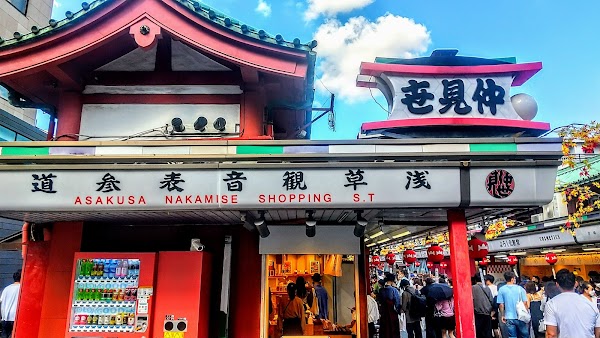
The approach to the temple is a procession. You pass under the Kaminarimon, the Thunder Gate, with its enormous red lantern weighing seven hundred kilograms. The gate was first erected in 941, though fire destroyed it multiple times — the current structure dates from 1960. On either side stand fierce guardian deities carved in wood, their faces twisted in protective rage. Walk through and you enter Nakamise-dori, a long arcade lined with stalls selling everything from rice crackers to folding fans. This shopping street has existed since the Edo period, when temple visitors needed food and souvenirs just as they do now.
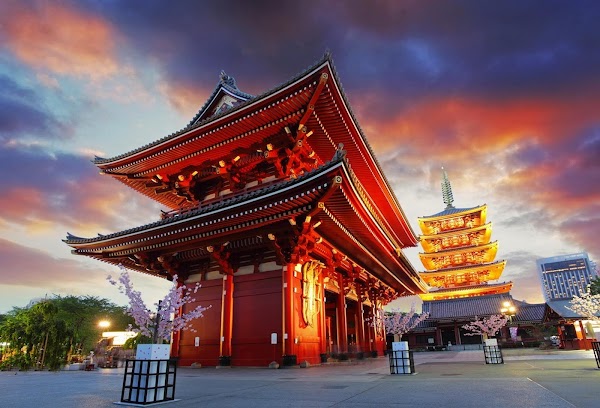
The main hall, the Hondo, looms ahead with its swooping tile roof and red pillars. What you see today is a 1958 reconstruction — American bombs levelled the original in 1945 during the final months of the war. But the layout follows the seventeenth-century design, and the craftsmanship honours old techniques. Step inside and the air grows cooler, darker. Worshippers toss coins into the offering box, clap twice, bow. Some shake wooden fortune sticks from metal cylinders, reading their luck on slips of paper. If the fortune is bad, they tie it to a rack outside, leaving the misfortune behind.
To the left of the main hall stands a five-storey pagoda, rebuilt in 1973 but echoing a structure first raised in 942. Each tier represents an element — earth, water, fire, wind, void — stacked in ascending order. The pagoda holds sacred relics, though visitors cannot enter. Its silhouette against the sky is one of Tokyo's most photographed angles, especially at dusk when the temple grounds glow under paper lanterns.
Sensoji sits in Asakusa, a neighbourhood that retains an older Tokyo texture. Wooden shophouses, narrow lanes, the occasional geisha walking to an appointment. The district was the city's entertainment heart during the Edo period, filled with kabuki theatres and pleasure quarters. That energy lingers in the crowds, the festival atmosphere, the sense that this place exists slightly outside modern time.
The temple hosts the Sanja Matsuri every May, one of Tokyo's largest festivals. Portable shrines are carried through the streets by teams of men and women in traditional dress, chanting and swaying under the weight. The neighbourhood floods with over a million visitors across three days. Even on ordinary mornings, the precinct hums with activity — school groups, elderly pilgrims, tourists clutching cameras, monks in black robes moving quietly through the throng.
Look closely at the main hall's ceiling. Painted panels depict dragons and celestial beings, the colours still vivid despite decades of incense smoke. The dragon is a protective symbol in Buddhist architecture, believed to summon rain and guard against fire. Given how many times fire has claimed this temple, the dragon clearly has work to do.
The incense cauldron near the main hall is always surrounded. People scoop the smoke with their hands, directing it toward an injury or a sore joint, hoping for relief. There is no official doctrine behind this practice — it is folk belief, passed down through generations, a ritual that feels older than the temple itself. Watch long enough and you will see every kind of visitor do it, from suited businessmen to schoolchildren.
As you leave, glance back at the precinct from the far side of Nakamise-dori. The rooflines layer against each other, red and grey and gold. Smoke still rises from the cauldron. Somewhere inside, the hidden Kannon statue rests in darkness, the fishermen's discovery still pulling people here after all these centuries. The city roars beyond the gates, but this courtyard holds its own rhythm, its own gravity.
Key facts
What to look for
Practical tips
Common questions
How long is the audio guide for Sensoji?
The free Lokali audio guide for Sensoji runs about 9 minutes. Allow extra time beyond that to look around at your own pace.
Is there a free audio guide to Sensoji?
Yes — the Lokali app narrates Sensoji free of charge in 50+ languages. It covers the history, what to look for on site and practical tips, and it works offline once downloaded.
Where is Sensoji?
Sensoji is in Taito, Japan, at 35.7148, 139.7967. Tap the map link on this page for directions from where you are.
What should you know before visiting Sensoji?
Visit early morning to avoid the largest crowds.
What is Sensoji known for?
Founded in 628 when fishermen found a Kannon statue.
On the map
Opens directions to Sensoji from your location.
More to see in Taito



Hear Sensoji in your language
The full story, narrated, in 50+ languages. Download it before you go and it plays offline, at your own pace, with no ticket and no tour group.