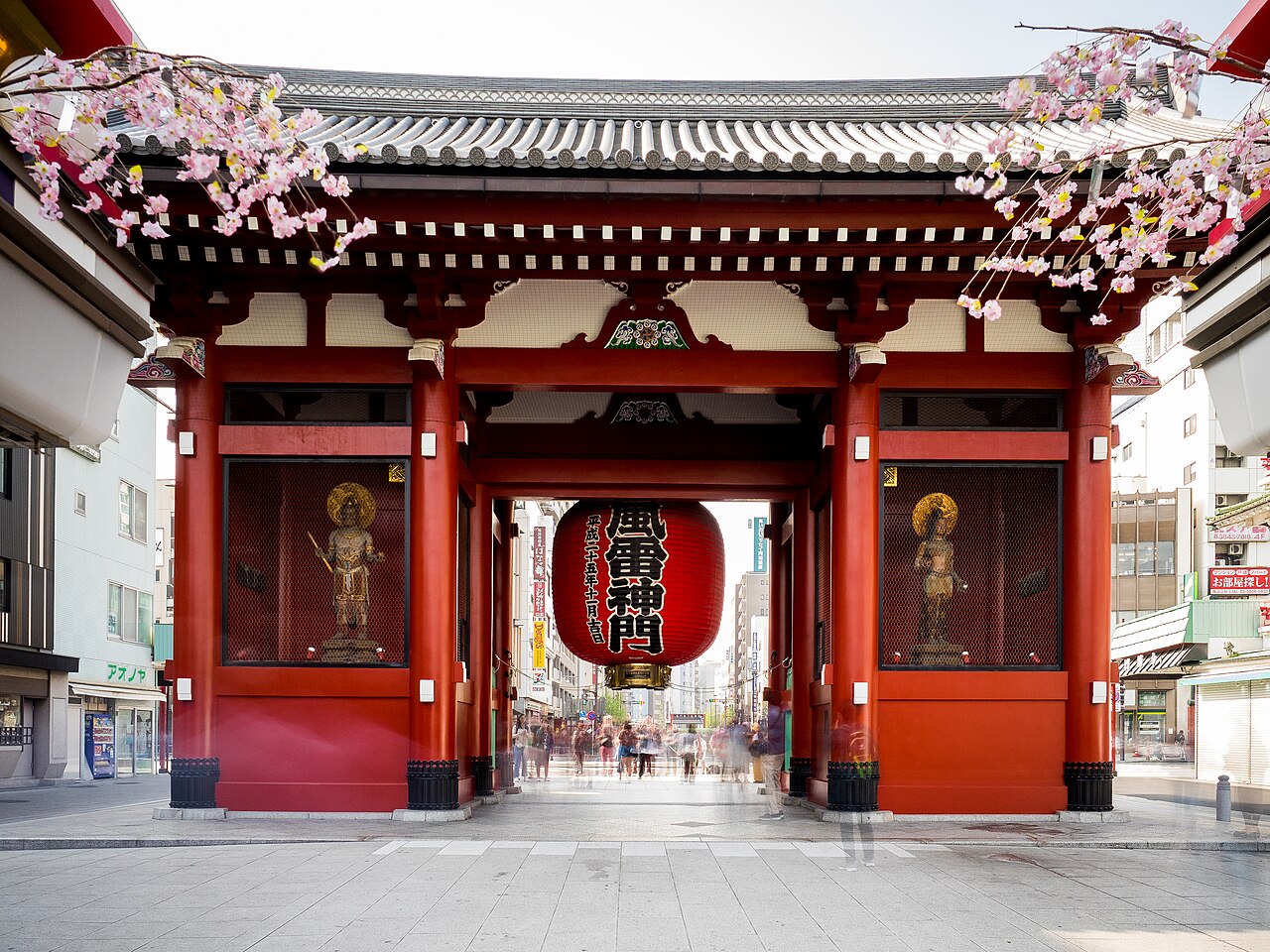
Asakusa Street is the historic pedestrian lane leading to Senso-ji Temple, lined with traditional wooden shops selling souvenirs, snacks, and crafts. It is in Taito, Japan. Most visitors spend 45–60 min here. The free Lokali audio guide runs 5 minutes.
✓ Verified August 2026 · how we write these guides
Visitor facts
| Time needed | 45–60 min |
|---|---|
| Lokali audio guide | 5 min · free |
| Type | Neighborhood |
| Best for | Local life |
| Location | Taito, Japan |
| Coordinates | 35.7151, 139.7963 |
| Languages | 45, in the Lokali app |
The story
A great red gate hung with an enormous paper lantern opens onto a long, narrow street lined with little stalls, leading toward the rooftops of an ancient temple. Crowds shuffle between sellers of snacks, fans, and trinkets under the lantern's shadow. This is Asakusa, the old heart of Tokyo, where the city's oldest temple draws a constant stream of visitors.
At the end of the street stands Senso-ji, the oldest temple in Tokyo, founded, by tradition, in the seventh century around a small golden image of a Buddhist goddess of mercy said to have been found in the river by two fishermen. It has been a place of pilgrimage ever since.
The approach begins at a famous outer gate, the Thunder Gate, hung with a massive red paper lantern and guarded by fierce protector statues. It is one of the most photographed spots in the city, and passing beneath the lantern marks the start of the temple route.
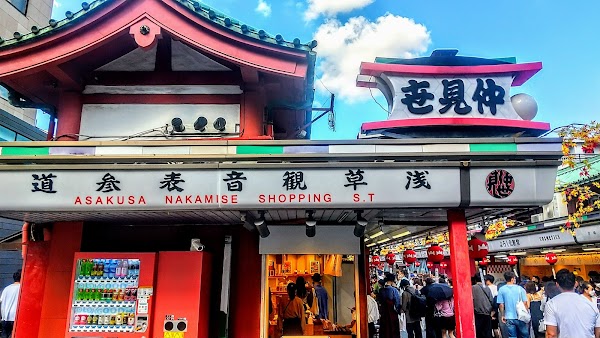
Between the gate and the temple runs a long shopping street, lined with small stalls that have sold snacks, souvenirs, and crafts to pilgrims for centuries. It is touristy and crowded, but it keeps an old tradition of trade tied to the temple alive.
The street is a place to eat as you walk, with stalls selling grilled rice crackers, sweet bean cakes, and other traditional snacks. Trying a few as you make your way toward the temple is part of the experience and a tasty introduction to old Tokyo flavours.
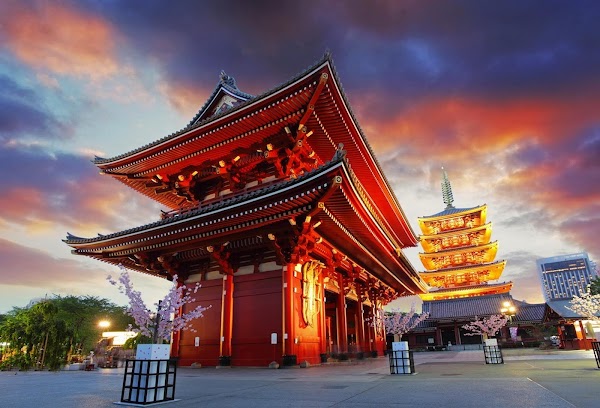
Beyond the shopping street lie the main temple hall, a five-storey pagoda, and an inner gate, all rebuilt after wartime destruction but faithful to their old forms. The smell of incense drifts from a great cauldron where visitors waft smoke over themselves for good health.
Visitors draw paper fortunes from numbered drawers, wash at a fountain, and bow before the main hall, and watching or joining these small rituals is part of the visit. The temple is busy but genuinely devotional, not just a backdrop for photographs.
Asakusa around the temple keeps more of an old, low-rise, downtown feel than much of modern Tokyo, with traditional shops, craftspeople, and old-style restaurants. Hand-pulled rickshaws wait near the gate to carry visitors around the lanes.
For a striking contrast, look across the river from near the temple to a tall modern broadcasting tower and bold modern buildings, the new city rising just beyond the old. The two skylines, ancient and modern, sit within one view.
The street and temple are busiest in the middle of the day. Early morning is calmer and cooler, and the temple grounds, lit at night after the stalls close, take on a quieter, more atmospheric mood worth seeing.
A few practical notes. The temple grounds are free and always open; the shopping street keeps daytime hours. Be mindful of others in the crush, follow any signs about eating while walking, and treat the temple as the sacred place it is.
Stand beneath the great lantern, with the stalls ahead and the temple roofs beyond, and remember that pilgrims have walked this same short street toward the same shrine for many centuries. Asakusa is where old Tokyo is easiest to feel. When you step away toward the river, the modern city returns across the water.
Key facts
What to look for
Practical tips
Common questions
How long do you need at Asakusa Street?
Plan 45–60 min. That is the time most visitors spend at Asakusa Street. The free Lokali audio guide adds about 5 minutes of narration you can listen to as you walk, so it fits inside your visit rather than adding to it.
Is there a free audio guide to Asakusa Street?
Yes — the Lokali app narrates Asakusa Street free of charge in 50+ languages. It covers the history, what to look for on site and practical tips, and it works offline once downloaded.
Where is Asakusa Street?
Asakusa Street is in Taito, Japan, at 35.7151, 139.7963. Tap the map link on this page for directions from where you are.
What should you know before visiting Asakusa Street?
Eat traditional snacks along the stall street.
What is Asakusa Street known for?
The old temple district at the heart of Tokyo.
What is the best time to visit Asakusa Street?
The side alleys branching off the main street hold quieter shops and tiny restaurants.
On the map
Opens directions to Asakusa Street from your location.
More to see in Taito



Hear Asakusa Street in your language
The full story, narrated, in 50+ languages. Download it before you go and it plays offline, at your own pace, with no ticket and no tour group.