
Asakusa Shrine is a small Shinto shrine built in 1649 to honor the fishermen who discovered the Senso-ji temple statue. It is in Taito, Japan. Most visitors spend 20–30 min here. The free Lokali audio guide runs 6 minutes.
✓ Verified August 2026 · how we write these guides
Visitor facts
| Time needed | 20–30 min |
|---|---|
| Lokali audio guide | 6 min · free |
| Type | Shrine |
| Best for | Local life |
| Location | Taito, Japan |
| Coordinates | 35.7152, 139.7993 |
| Languages | 45, in the Lokali app |
The story
You hear it before you see it. The clap of hands. The soft rattle of a coin dropping into a wooden box. A bell rope swings, and its chime fades into the noise of the crowd. Incense drifts over from somewhere close. You are standing beside the great temple, but this is a different place. Quieter. Older in feeling. People slow down here without quite knowing why. This is Asakusa Shrine.
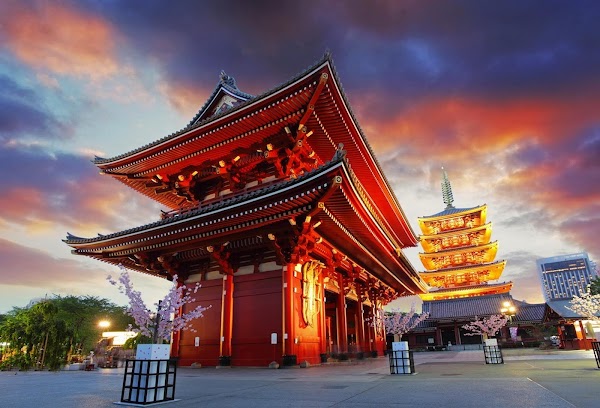
The shrine sits just to the right of the main temple hall. Most visitors walk straight past it. They are heading for the giant incense burner and the tall pagoda. They follow the crowd toward the bigger sights. But step aside, just a few meters, and you find a smaller world. Dark wood. Quiet corners. Gold that catches the light under the eaves.
To understand this shrine, you need a story. The story begins in the year 628. Two brothers were fishing in the Sumida River, close to here. Their names were Hinokuma Hamanari and Hinokuma Takenari. They cast their net into the water. When they pulled it back, they found a small golden statue caught inside. It was an image of Kannon, the goddess of mercy.
The brothers did not understand what they had found. They set the statue back in the river. But it came to their net again. A wise man in the village understood. His name was Hajino Nakatomo. He saw that the statue was holy. He turned his own home into a small temple to keep it safe. That humble temple grew, over the centuries, into the great hall you see today.
So there were three men in the story. Two fishermen and one wise man. This shrine honors all three of them. That is why people call it the Sanja Sama. The words mean the shrine of the three guardians. The temple holds the goddess. The shrine holds the memory of the people who first cared for her.
Look at the building in front of you. The dark, heavy beams. The bright gold details under the roof. The carved wood at the corners. This style of building is called gongen. It was a favored way to build shrines long ago. The paint has faded and been restored many times. But the shape has stayed the same for centuries.
The shrine you see was finished in 1649. It was a gift from a powerful ruler named Tokugawa Iemitsu. Think about what that date really means. The wooden buildings in this district have burned and fallen many times. Fires swept through. Earthquakes shook the ground. War came from the sky. Almost everything here is a copy of a copy. But this shrine survived. It stood through the great bombing of the city in the Second World War.
That makes it one of the oldest things in this whole district. The temple beside it is far more famous. Yet the temple is mostly new. It burned in the war and was rebuilt from concrete. This smaller shrine, off to the side, is the true survivor. The real old wood is here, not there.
Once a year, this quiet place changes completely. On the third weekend of May, the shrine holds a festival. It is called the Sanja Matsuri. The name honors the same three men from the story. For three days, the calm gives way to something wild and loud.
During the festival, the narrow streets fill with people. Teams carry heavy portable shrines on their shoulders. These are golden boxes, called mikoshi. People believe they hold the spirits of the gods for the day. The crowds push close. The bearers shout and sway and lift the weight together. Close to two million people come over the three days. It is one of the largest festivals in the whole city.
If you visit on an ordinary day, you will see none of that. You will see a calm courtyard. A few worshippers. Perhaps a priest crossing the stones in white and orange robes. Both of these are the shrine. The roar of the festival and the silence of a weekday morning. The same old wood holds them both.
Today, perhaps, it is calm. You can walk right up to the front. You can drop a coin into the box. You can pull the thick rope and ring the bell above you. The custom is simple, and you are welcome to try it. Bow twice. Clap your hands twice. Hold a quiet wish in your mind. Then bow once more.
Most people rush past this shrine on their way to bigger sights. They never learn the story. They never know that this is the older building, the one that lived through the fires. But now you know. And maybe that changes how it feels to stand here. In the quiet. Beside the river where two fishermen pulled a small gold figure from the water, all those centuries ago.
Key facts
What to look for
Practical tips
Common questions
How long do you need at Asakusa Shrine?
Plan 20–30 min. That is the time most visitors spend at Asakusa Shrine. The free Lokali audio guide adds about 6 minutes of narration you can listen to as you walk, so it fits inside your visit rather than adding to it.
Is there a free audio guide to Asakusa Shrine?
Yes — the Lokali app narrates Asakusa Shrine free of charge in 50+ languages. It covers the history, what to look for on site and practical tips, and it works offline once downloaded.
Where is Asakusa Shrine?
Asakusa Shrine is in Taito, Japan, at 35.7152, 139.7993. Tap the map link on this page for directions from where you are.
What should you know before visiting Asakusa Shrine?
Bow twice, clap twice, then bow once more.
What is Asakusa Shrine known for?
Founded after a Kannon statue was found in 628.
What is the best time to visit Asakusa Shrine?
The shrine's annual Sanja Matsuri festival (May) features portable shrines carried through the streets by thousands.
On the map
Opens directions to Asakusa Shrine from your location.
More to see in Taito



Hear Asakusa Shrine in your language
The full story, narrated, in 50+ languages. Download it before you go and it plays offline, at your own pace, with no ticket and no tour group.