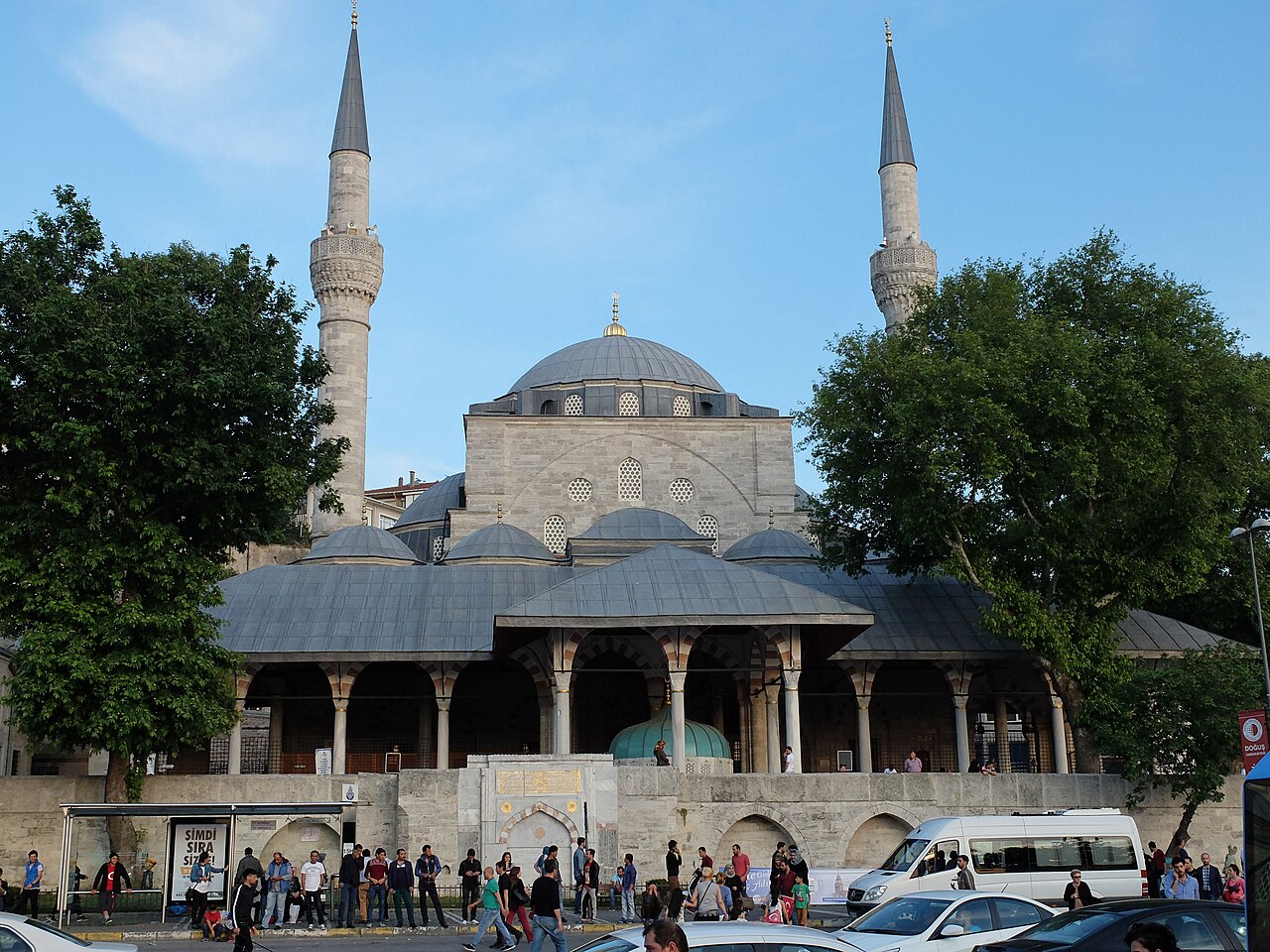
Mihrimah Sultan Mosque
41.0303° N · 28.9365° E · Mosque
Mihrimah Sultan Mosque is a Mimar Sinan mosque from 1562, built for Süleyman the Magnificent's daughter. It is in Istanbul, Türkiye. Most visitors spend 30–45 min here. The free Lokali audio guide runs 9 minutes.
✓ Verified August 2026 · how we write these guides
Visitor facts
| Time needed | 30–45 min |
|---|---|
| Lokali audio guide | 9 min · free |
| Type | Mosque |
| Best for | History |
| Location | Istanbul, Türkiye |
| Coordinates | 41.0303, 28.9365 |
| Languages | 45, in the Lokali app |
The story
Stand in the courtyard and notice the light. It floods through tall arched windows, pooling on the marble floor in bright geometric patterns that shift as the sun moves. This is Üsküdar's landmark mosque, built in the fifteen-fifties by Mimar Sinan — the Ottoman Empire's greatest architect — for Mihrimah Sultan, daughter of Suleiman the Magnificent.
Mihrimah was not just a princess. She was one of the wealthiest and most politically active women in Ottoman history, commissioning charitable foundations, schools, and public kitchens across the empire. When she asked Sinan to design her a mosque here on the Asian shore of Istanbul, he gave her something unusual: a building defined not by mass but by luminosity.
Step inside and look up. The dome seems to float, supported by four half-domes and a ring of windows that circle its base. Sinan stripped away heavy piers and thick walls, replacing them with slender columns and wide expanses of glass. The effect is almost skeletal — stone reduced to its minimum, light given maximum room. For a building nearly five centuries old, it feels startlingly open.
The name Mihrimah means sun and moon. According to one romantic story, Sinan was in love with the princess and encoded his devotion into architecture. He built her two mosques — this one in Üsküdar and another across the Bosphorus in Edirnekapı. Once a year, on the spring equinox, the sun sets behind the western mosque just as the moon rises behind this eastern one, so sun and moon appear simultaneously in the sky, framed by her namesake buildings. It is a lovely tale, though historians note Sinan was already an old man when he designed these structures, and the alignment may be coincidental.
Walk around the interior and notice the İznik tiles. They line the lower walls in panels of turquoise, cobalt, and tomato red — floral motifs that were fashionable in the mid-sixteenth century. Many tiles have been replaced over the years, but enough originals remain to show the quality of the workshop that supplied them.
The mosque sits on a raised platform above Üsküdar's busy streets. From the courtyard, you can see the Bosphorus and, on clear days, the European side of Istanbul rising across the water. This location was deliberate. Üsküdar was the gateway to Anatolia and the eastern provinces, and a royal mosque here signaled imperial presence on both continents.
Listen to the fountain in the courtyard. It is a later addition, but it follows Ottoman tradition — the sound of running water was meant to mask conversation, giving worshippers privacy as they performed ablutions before prayer. The octagonal structure is simpler than the mosque itself, but it shares the same logic: function expressed through elegant geometry.
Mihrimah outlived her father, her husband, and most of her brothers. She died in fifteen eighty-eight, having shaped the architectural and charitable landscape of Istanbul more than almost any other woman of her era. Sinan, who died the same year, left behind more than three hundred buildings. This mosque is not his largest or most famous, but it may be his most graceful.
Before you leave, stand near the mihrab — the niche indicating the direction of Mecca — and look back toward the entrance. The entire volume of the prayer hall reveals itself in one glance: light, space, and stone held in balance. Sinan was in his sixties when he designed this. He had built fortresses, bridges, aqueducts, and dozens of mosques. Here, he made something quieter — a building that does not shout its presence but draws you in with clarity and calm.
As you step back into Üsküdar's streets, notice how the mosque anchors the neighborhood. Vendors sell simit and tea near the entrance, ferries sound their horns at the waterfront below, and the call to prayer echoes off the hills. The building has stood through earthquakes, wars, and centuries of change, still doing exactly what Mihrimah and Sinan intended: gathering light, sheltering prayer, and marking the skyline with quiet authority.
Key facts
What to look for
Practical tips
Common questions
How long do you need at Mihrimah Sultan Mosque?
Plan 30–45 min. That is the time most visitors spend at Mihrimah Sultan Mosque. The free Lokali audio guide adds about 9 minutes of narration you can listen to as you walk, so it fits inside your visit rather than adding to it.
Is there a free audio guide to Mihrimah Sultan Mosque?
Yes — the Lokali app narrates Mihrimah Sultan Mosque free of charge in 50+ languages. It covers the history, what to look for on site and practical tips, and it works offline once downloaded.
Where is Mihrimah Sultan Mosque?
Mihrimah Sultan Mosque is in Istanbul, Türkiye, at 41.0303, 28.9365. Tap the map link on this page for directions from where you are.
What should you know before visiting Mihrimah Sultan Mosque?
Visit in late afternoon when light fills the prayer hall.
What is Mihrimah Sultan Mosque known for?
Designed by Mimar Sinan in the fifteen-fifties.
What is the best time to visit Mihrimah Sultan Mosque?
Visit at sunset on the equinoxes—March 21 and September 21—when light through the western windows aligns with the mihrab.
On the map
Opens directions to Mihrimah Sultan Mosque from your location.
More to see in Istanbul


Hear Mihrimah Sultan Mosque in your language
The full story, narrated, in 50+ languages. Download it before you go and it plays offline, at your own pace, with no ticket and no tour group.