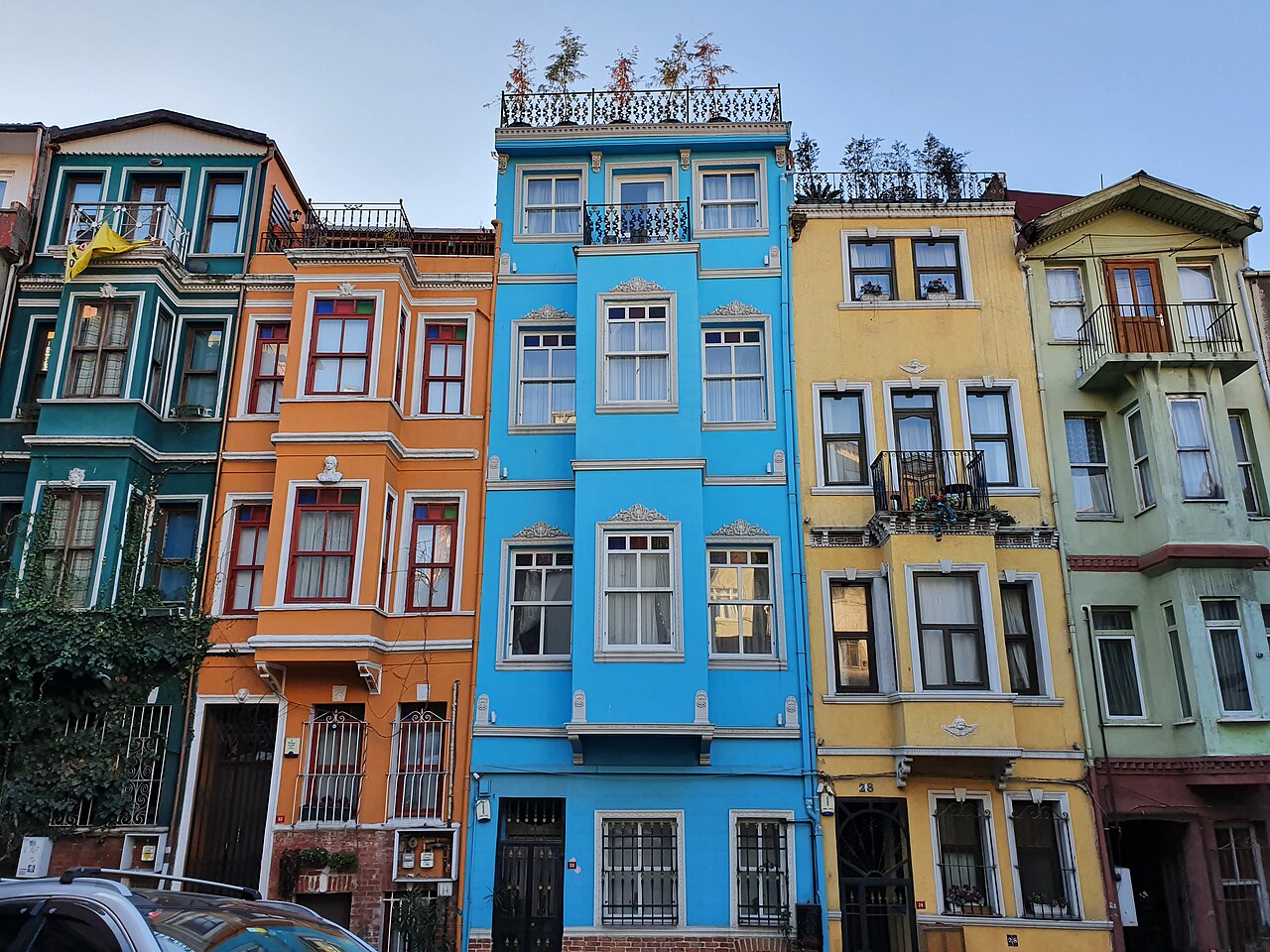
Balat is a neighborhood in Istanbul, Türkiye. Historic neighbourhood on the Golden Horn's western shore, home to Ottoman-era wooden houses painted in pastel yellows, blues, and pinks. Most visitors spend 1–2 hours here. The free Lokali audio guide runs 5 minutes.
✓ Verified August 2026 · how we write these guides
Visitor facts
| Time needed | 1–2 hours |
|---|---|
| Lokali audio guide | 5 min · free |
| Type | Neighborhood |
| Best for | Local life |
| Location | Istanbul, Türkiye |
| Coordinates | 41.0246, 28.9493 |
| Languages | 45, in the Lokali app |
The story
Steep lanes of tall, narrow houses painted in faded reds, blues, and yellows climb away from the water, washing strung overhead, antique shops and small cafes spilling onto the cobbles. This is Balat, an old quarter on the shore of the Golden Horn, one of the most colourful and layered neighbourhoods in Istanbul.
Balat and its neighbour Fener were for centuries home to communities the rest of the city did not always make room for — Jewish, Greek, and Armenian families lived, worshipped, and traded here, and their synagogues, churches, and old houses still stand among the lanes, a record of a more mixed Istanbul.
The quarter is famous for its houses: tall, narrow fronts of wood or stone, many leaning with age, painted in bright colours that have softened over time. A few streets of them, restored and endlessly photographed, have become the image of Balat, though much of the quarter remains worn and real.
Just along the shore, the neighbouring district of Fener holds the seat of the Greek Orthodox Patriarch, a spiritual centre for Orthodox Christians far beyond the city. A grand old Greek school building rises on the hill above, a reminder of how important these communities once were here.
Balat is a place to wander rather than to tick off sights. The pleasure is in turning a corner to find a painted stairway, a cat asleep on a doorstep, a workshop, or a cafe in an old house. Little is grand; the appeal is texture, colour, and the feel of a real, ageing neighbourhood.
In recent years cafes, antique shops, and small galleries have opened among the old houses, drawing visitors and a younger crowd. The quarter has become fashionable, and the mix of vintage shops and traditional life is part of what gives it its current character.
That popularity is changing Balat. Some welcome the new life and money; others worry the quarter is being prettified for visitors and losing its old residents. Walking it, you see both the restored, photogenic streets and the still-shabby lanes where ordinary life goes on.
Within a short walk you can pass a synagogue, a Greek Orthodox church, an Armenian church, and a mosque, a density of different faiths rare even in this mixed city. It is the clearest sign of who has lived here over the centuries.
The quarter slopes down to the Golden Horn, the inlet that curves into the city, and from the higher lanes you catch glimpses of the water and the domes and minarets across it. The waterfront itself has walking paths and ferry stops along the shore.
Balat is a good place to eat simply and well, from a long traditional breakfast to street food and old bakeries. Sitting at a cafe table in a painted lane with a coffee or a slow Turkish breakfast is one of the quarter's chief pleasures.
A few practical notes. The lanes are steep and cobbled, so wear good shoes; the quarter is a little away from the main tourist sights, reached by ferry, bus, or a walk along the Golden Horn. Be respectful when photographing, as people live in these much-photographed houses.
Find a cafe table or a step with a view down a painted lane and let the quarter's slow life pass for a while. Balat carries the memory of an older, more mixed Istanbul in its walls and its many faiths. When you head back toward the busier centre, the colour of its streets stays with you.
Key facts
What to look for
Practical tips
Common questions
How long do you need at Balat?
Plan 1–2 hours. That is the time most visitors spend at Balat. The free Lokali audio guide adds about 5 minutes of narration you can listen to as you walk, so it fits inside your visit rather than adding to it.
Is there a free audio guide to Balat?
Yes — the Lokali app narrates Balat free of charge in 50+ languages. It covers the history, what to look for on site and practical tips, and it works offline once downloaded.
Where is Balat?
Balat is in Istanbul, Türkiye, at 41.0246, 28.9493. Tap the map link on this page for directions from where you are.
What should you know before visiting Balat?
Wear good shoes for the steep cobbled lanes.
What is Balat known for?
An old quarter on the Golden Horn shore.
What is the best time to visit Balat?
Wander the steep cobbled streets without a map—each corner reveals a café or a cat sunbathing on a windowsill.
On the map
Opens directions to Balat from your location.
More to see in Istanbul


Hear Balat in your language
The full story, narrated, in 50+ languages. Download it before you go and it plays offline, at your own pace, with no ticket and no tour group.