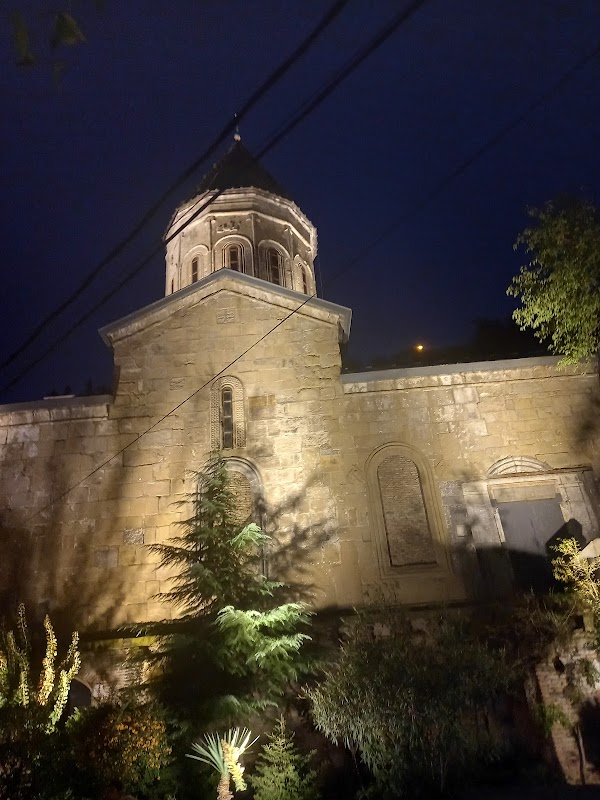
Amasya Old Town is a historic town in Amasya, Türkiye. Geographer Strabo was born here around 64 BC. Rock tombs held kings of Pontus from the third century BC. Most visitors spend 3-4 hours here. The free Lokali audio guide runs 6 minutes.
✓ Verified October 2026 · how we write these guides
Visitor facts
| Time needed | 3-4 hours |
|---|---|
| Lokali audio guide | 6 min · free |
| Type | Historic Town |
| Best for | Romantic |
| Location | Amasya, Türkiye |
| Coordinates | 40.6533, 35.8331 |
| Languages | 45, in the Lokali app |
The story
Arrive at the river and stop there first. The Yeşilırmak, the green river, slides through the middle of town, quick and cloudy, under low stone and iron bridges. A row of white Ottoman houses stands directly on its bank, wooden upper floors leaning over the water on struts. Behind them a sheer rock face climbs into the light, and cut into that rock, high up, are enormous dark doorways. Swallows cross between the houses and the cliff. The whole scene fits into one slow turn of your head.
Those doorways are royal tombs. In the third century BC this town, then called Amaseia, became the capital of Pontus, a kingdom that blended Persian ancestry with Greek culture. Its early kings were buried here, in chambers cut straight into the cliff, framed by carved facades and reached by rock stairways. Several tombs form the main royal group above the old town, with more scattered along the valley. Their occupants are long gone. The architecture of power stayed behind, at full scale.
You can climb to them. A stepped path rises from the riverside lanes to the tomb terrace, and the walk takes a sweaty quarter of an hour. Up close, the scale impresses. Doorways stand far taller than a person. Around some tombs, a carved corridor separates the monument from the living rock, so each tomb reads as a freestanding block within the cliff. After dark, floodlights pick the facades out of the night, and the glow is visible from every bridge in town.
Amasya raised the man who described the whole ancient world. The geographer Strabo was born here around 64 BC, as Pontus was falling to Rome. His seventeen-volume Geography, the most complete geographical work to survive from antiquity, describes lands from Spain to India. He wrote about his hometown too, praising the river gorge and the fortress above it. A modern statue of him stands by the water, holding a globe he never saw but described anyway.
Above the tombs, the walls of Harşena Castle trace the summit ridge. The crag was fortified in ancient times and repaired by every power that followed, Roman, Byzantine, and Ottoman in turn, because whoever held this rock held the river road through the mountains. Reaching the top takes effort or a taxi, and the reward is the classic view. The river below, the town threaded along it, and orchards filling the valley in both directions.
Under the Ottomans, Amasya held a special rank. It was a city of princes. Young heirs to the throne were sent here as provincial governors, learning statecraft with their tutors before, possibly, becoming sultan. The future Bayezid the Second governed Amasya for more than two decades in the fifteenth century. The arrangement filled the town with palaces, schools, and ambitious officials. Locals will tell you, accurately, that this small river town helped train an empire's rulers.
That patronage left monuments along the banks. The mosque complex of Sultan Bayezid the Second, from the 1480s, is the largest, set in a plane-shaded courtyard near the river, with a medrese and library beside it. Older buildings survive too. One thirteenth-century mosque is famous for its spiral-carved minaret, and Seljuk and Ilkhanid rulers left schools and tombs around the town. Amasya's museum gathers the loose finds, including several medieval mummies that startle unprepared visitors.
The town's favourite story is a love story. Ferhat, a gifted craftsman, loved Şirin, a princess. To win her, tradition says, he was ordered to cut a water channel through the mountain with his own hands. As he neared success, a false report of Şirin's death was carried to him, and he died of grief on the rock. An old water channel on the hillside bears his name today. Take it as legend, told here for many centuries, and still selling sweets and souvenirs.
Modern history also made a stop here. In June 1919, Mustafa Kemal, later called Atatürk, met with fellow officers in Amasya and issued the Amasya Circular, a document declaring that the nation's independence was in danger and calling for a national congress. Historians mark it as the first written step of the Turkish War of Independence. The town keeps the memory carefully, with monuments and a reconstructed meeting hall. A quiet river town, twice a hinge of history.
Walk the Yalıboyu lane behind the riverside houses. These are the town's signature buildings, timber-framed, whitewashed, their upper rooms cantilevered toward the water. Several are restored as museums, cafes, and guesthouses. One nineteenth-century mansion, the Hazeranlar Konağı, is furnished as a period house and shows how a prosperous family arranged its rooms. From the opposite bank, the whole row doubles itself in the river on calm evenings, houses above and houses below.
Amasya also travels on an apple. A small, sweet, red-skinned variety carries the town's name across Turkey, and orchards fill the valley floor beyond the centre. Autumn is their season, when market stalls stack them in pyramids. The valley has fed the town for a very long time. Ancient writers already praised the fruit of this gorge, and the irrigation channels that thread the orchards have medieval and older roots.
Finish on a bridge as the light drops. The river runs beneath you, the houses lean over their reflections, and the tomb facades hold the last brightness high on the cliff. The call to prayer rolls off the rock face and doubles itself, one voice from the minarets and one from the mountain. Kings, princes, geographers, and lovers all stood beside this same green water. This evening, the town has added you, briefly, to that list.
Key facts
What to look for
Practical tips
Common questions
How long do you need at Amasya Old Town?
Plan 3-4 hours. That is the time most visitors spend at Amasya Old Town. The free Lokali audio guide runs 6 minutes and is made to listen to while you walk.
Is there a free audio guide to Amasya Old Town?
Yes — the Lokali app narrates Amasya Old Town free of charge in 50+ languages. No ticket, tour group or subscription, and it works offline once downloaded.
Where is Amasya Old Town?
Amasya Old Town is in Amasya, Türkiye, at 40.6533, 35.8331. Tap the map link on this page for directions.
What should you know before visiting Amasya Old Town?
Cross the river at dusk when the tombs are lit
What is Amasya Old Town known for?
Geographer Strabo was born here around 64 BC
What is the best time to visit Amasya Old Town?
Climb the stepped path to the tomb terrace early
On the map
Opens directions to Amasya Old Town from your location.
Hear Amasya Old Town in your language
The full story, narrated, in 50+ languages. Download it before you go and it plays offline, at your own pace, with no ticket and no tour group.