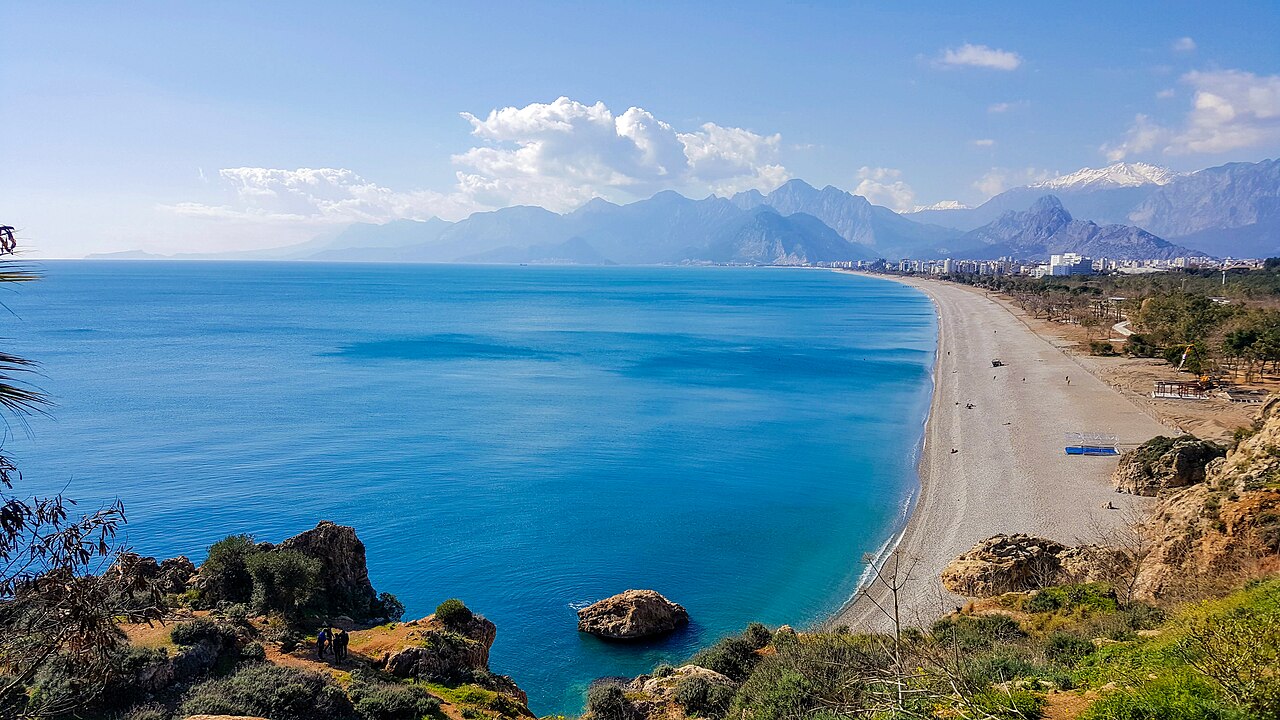
Antalya Old Town is a neighborhood in Antalya, Türkiye. Hadrian's Gate marked the emperor's visit in 130 AD. Kaleiçi means inside the castle in Turkish. Most visitors spend 1-2 hours here. The free Lokali audio guide runs 7 minutes.
✓ Verified October 2026 · how we write these guides
Visitor facts
| Time needed | 1-2 hours |
|---|---|
| Lokali audio guide | 7 min · free |
| Type | Neighborhood |
| Best for | Authentic finds |
| Location | Antalya, Türkiye |
| Coordinates | 36.8845, 30.7053 |
| Languages | 45, in the Lokali app |
The story
The streets here are narrow, and they are paved with rounded stones. Walk slowly. Sound behaves strangely between the high walls — a scooter three streets away seems close, and a conversation on the next corner disappears. In summer the shade is deep. The air smells of orange blossom in spring, and of grilled fish near the harbour later in the year. Every so often a lane opens, and you get a sudden view of the sea, far below.
The old town is called Kaleiçi, which means inside the castle. That is a literal description. The district sits within the line of the old city walls, wrapped around a small harbour on the Mediterranean. The plan is not a grid. Lanes bend, narrow, and end without warning. Getting lost here is normal, and it is also the correct way to see the place. The walls and the sea will always bring you back.
The city was founded by a king of Pergamon named Attalus the Second, in the second century BC, and it was named after him. It passed to Rome, then to the Byzantine empire, then to the Seljuks, and then to the Ottomans. Each of those left something standing. What makes Kaleiçi interesting is not any single monument. It is that you can walk past four different centuries in five minutes without changing streets.
Start at Hadrian's Gate on the eastern side. It has three arches of white marble, set into the old wall, with towers on either side. It was built for a visit by the emperor Hadrian in 130 AD. Look down as you pass through. The original paving is preserved below the modern walkway, and it carries deep grooves cut by cart wheels. The gate was blocked up for a long period, and it was only reopened in modern times.
The tallest landmark is the Yivli Minare, the fluted minaret. It is built of brick, and its shaft is divided into eight half-round flutes that run from bottom to top. It dates from the Seljuk period, in the thirteenth century, and it has become the visual sign of Antalya. You will see it on street signs and on municipal logos. The bands of turquoise tile near the base are worn, and they show best with the sun behind you.
A short walk away stands one of the most layered buildings in the country, and most people pass it without stopping. It is called Kesik Minare, the truncated minaret. The structure began as a Roman temple. It was converted into a Byzantine church. Later it became a mosque, and a minaret was added. A fire in the nineteenth century destroyed the roof and cut the minaret short. All those stages are visible in the masonry at once.
At the southern edge of the old town, on the cliff top, stands the Hıdırlık Tower. It is round, built of large stone blocks, and it sits on a square base. It is Roman. What it was for is not settled. Suggestions include a tomb for an important figure, a lighthouse, and a defensive lookout. Nobody has proven any of them. It is one of the better places in the city to watch the sun go down over the water.
The harbour below is the reason the city exists. It is small, sheltered by the cliff, and it served as the working port for centuries. Trade came through it, and so did pilgrims and armies. Today it holds tour boats and yachts, and restaurants line the quay. Walk down the ramp rather than taking the lift, if you can manage the slope. The scale of the cliff only makes sense when you descend it on foot.
The wooden houses are the other half of Kaleiçi. Ottoman-era homes here typically have a stone ground floor and a timber upper storey that projects out over the street. That overhang is called a cumba, and it let the family see up and down the lane without being seen. Windows have wooden shutters. Courtyards hide behind plain doors. Many of these houses now operate as small hotels, restored room by room.
Kaleiçi was not always cared for. By the middle of the twentieth century much of it had run down, and buildings were being lost. A conservation programme from the 1980s changed that, restoring streets and houses and turning the harbour into a marina. The work won international recognition in the tourism field. It also changed who lives here. Many original residents moved out as property values rose, which is a pattern old towns share worldwide.
Two things reward a detour. The Antalya Museum sits outside the old town to the west, and it holds sculpture from Perge that ranks among the best Roman collections anywhere. And in the lanes themselves, look for the small shops selling fresh orange juice. The plain around the city grows citrus, and the fruit is pressed in front of you. Pomegranate is the other option, and it is sharper than most people expect.
The walls repay attention. Sections survive on the eastern and southern sides, and the masonry changes as you follow them. Large squared blocks near the bottom are ancient. Above them the stonework becomes rougher and more mixed, with pieces of older buildings reused as filling. Look for a column drum or a carved fragment sitting sideways in a wall. Builders here took whatever was to hand, over and over, for centuries.
Kaleiçi is small enough to cross in fifteen minutes, and it rewards several passes. Morning suits the monuments, when light falls on the eastern faces and the shops are still opening. Afternoon suits the harbour, and a boat out along the cliffs. Evening suits the lanes, when the day visitors have gone and residents come out. The district feels like three different places depending on when you walk through it.
Find a wall near the cliff edge in the evening and sit on it. Below you the water is moving against the rocks, and the mountains across the bay turn from grey to pink as the light goes. Behind you, a lane you walked through earlier is emptying out. People have watched this same bay from this same cliff for more than two thousand years. Tonight it is your turn, and nobody has improved on the view.
Key facts
What to look for
Practical tips
Common questions
How long do you need at Antalya Old Town?
Plan 1-2 hours. That is the time most visitors spend at Antalya Old Town. The free Lokali audio guide runs 7 minutes and is made to listen to while you walk.
Is there a free audio guide to Antalya Old Town?
Yes — the Lokali app narrates Antalya Old Town free of charge in 50+ languages. No ticket, tour group or subscription, and it works offline once downloaded.
Where is Antalya Old Town?
Antalya Old Town is in Antalya, Türkiye, at 36.8845, 30.7053. Tap the map link on this page for directions.
What should you know before visiting Antalya Old Town?
Walk down to the harbour rather than taking the lift
What is Antalya Old Town known for?
Hadrian's Gate marked the emperor's visit in 130 AD
What is the best time to visit Antalya Old Town?
Time Hıdırlık Tower for the hour before sunset
On the map
Opens directions to Antalya Old Town from your location.
More to see in Antalya


Hear Antalya Old Town in your language
The full story, narrated, in 50+ languages. Download it before you go and it plays offline, at your own pace, with no ticket and no tour group.