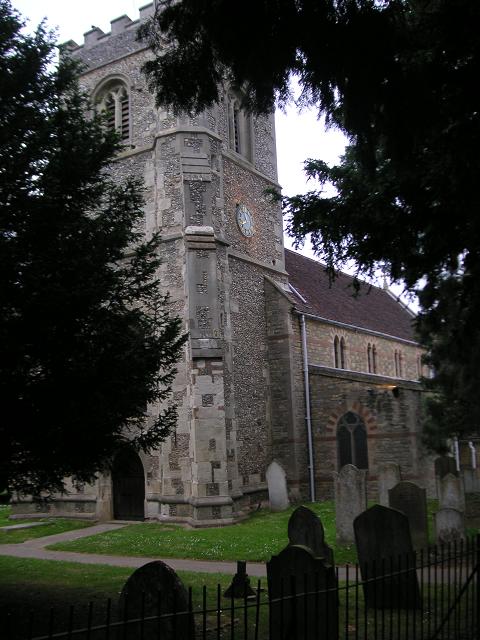
Church of St Nicholas is a church in Demre, Türkiye. Nicholas served as bishop of Myra in the fourth century. Merchants from Bari removed his relics from Myra in 1087. Most visitors spend 45-60 min here. The free Lokali audio guide runs 6 minutes.
✓ Verified October 2026 · how we write these guides
Visitor facts
| Time needed | 45-60 min |
|---|---|
| Lokali audio guide | 6 min · free |
| Type | Church |
| Best for | History |
| Location | Demre, Türkiye |
| Coordinates | 36.2447, 29.9853 |
| Languages | 45, in the Lokali app |
The story
The air changes as you go down the steps. Outside, the sun presses on the plastic roofs of Demre's greenhouses. Inside, the stone is cool and slightly damp. Light comes through a modern shelter overhead and falls in pale strips across the floor. You can hear your own footsteps on the old paving. Somewhere a group is speaking quietly in another language. The smell is dust, limestone and cold mortar. This is one of the oldest surviving churches on the Turkish coast.
Demre was called Myra in antiquity. It was one of the main cities of Lycia — the ancient region that covers this stretch of coast. In the fourth century a man named Nicholas served as its bishop. Very little about his life was written down at the time. The stories came later. He was said to give money in secret to people who needed it. One account describes him dropping coins through a window at night. Tradition, not record, carries most of what we know.
The building around you is not the one Nicholas knew. Churches were raised over his grave, damaged, and rebuilt more than once. What stands now is mostly medieval work, with older material reused inside it. Look at the columns. Some do not match each other. Masons took what was available from earlier structures nearby. The plan is a basilica — a long hall with side aisles — with a domed section and vaulted chapels added at different times.
The tomb draws the most attention. In a side aisle there is a stone sarcophagus with a broken lid. Visitors have long identified it as the burial place of Nicholas. The bones are not here. In 1087 sailors and merchants from Bari, in southern Italy, took the relics from Myra and carried them across the sea. A basilica was built for them in Bari, where they remain. Venice claims a portion as well. Demre keeps the empty grave.
Look down. The floor is one of the best things in the church. Small pieces of coloured stone are cut and fitted into patterns — circles, squares, interlocking bands. Craftsmen used marble in grey, white, red and green. Some panels are worn almost smooth by feet. Others still hold sharp edges. Above you, on the vaults, patches of painted plaster survive. Figures stand in rows, their faces faded to outlines. Damp and time removed most of the colour.
For a long period the church was not visible at all. The river that runs past Demre carries silt down from the mountains. Floods covered the lower town, and the church filled with mud almost to the level of the upper walls. That mud protected the floors and the lower paintings. Excavation began in the nineteenth century. Russian patrons, who honoured Nicholas as a major saint, paid for restoration work. Some of their additions, including a bell tower, are still in place.
The bishop of this town became Santa Claus by a long route. In Dutch tradition he is Sinterklaas, who brings gifts to children in December. Dutch settlers carried the custom to North America. The name shortened. Writers and illustrators in the nineteenth century added the sleigh, the reindeer and the red suit. The figure kept moving north until he lived at the pole. It began here, in a hot farming town on the Mediterranean coast.
The metal and glass roof over your head is modern. Conservators built it to keep rain off the paintings and floors, because the vaults no longer shed water reliably. It changes the light. Instead of shafts of sun through windows, you get an even grey wash. Some visitors find that disappointing. It is also the reason the painted plaster is still here. Restoration continues in sections, so parts of the church may be fenced off during your visit.
Every year on 6 December, clergy hold a service here for the saint's feast day. Orthodox pilgrims travel from several countries to attend. On ordinary days you will still see people leaving small offerings near the tomb — coins, photographs, folded notes. Staff clear them regularly. If you arrive while a group is praying, step aside and wait. The building works as a museum for most of the year and as a church for a few hours of it.
Myra did not end at this church. A short distance away, a rock face holds Lycian tombs cut into the cliff. They were carved to look like wooden houses, with beams and pitched roofs copied in stone. Below them sits a Roman theatre with rows of seating and carved masks among the fallen blocks. The two sites together explain the town — a Lycian city, then a Roman one, then a Christian pilgrimage centre, then farmland.
Outside the gate, the modern town is built around agriculture. Greenhouses cover the plain in sheets of plastic that catch the light from the road above. Tomatoes and peppers grow in them through the year. In the square there is a statue of Santa Claus, complete with sack and children — a version of Nicholas that the bishop would not recognise. Nearby shops sell icons, ceramic ornaments and small painted eggs to visitors.
Stand near the tomb for a moment before you leave. Listen to the sound of the room — footsteps, low voices, the hum of the fans. The floor under your feet was laid by people who expected pilgrims to walk on it. You are one of them, whatever you believe. Outside, the greenhouses are still catching the sun, and the mountains rise behind them. The saint left this place almost a thousand years ago. The town kept his name anyway.
Key facts
What to look for
Practical tips
Common questions
How long do you need at Church of St Nicholas?
Plan 45-60 min. That is the time most visitors spend at Church of St Nicholas. The free Lokali audio guide runs 6 minutes and is made to listen to while you walk.
Is there a free audio guide to Church of St Nicholas?
Yes — the Lokali app narrates Church of St Nicholas free of charge in 50+ languages. No ticket, tour group or subscription, and it works offline once downloaded.
Where is Church of St Nicholas?
Church of St Nicholas is in Demre, Türkiye, at 36.2447, 29.9853. Tap the map link on this page for directions.
What should you know before visiting Church of St Nicholas?
Wear shoes with grip; the old marble paving is uneven
What is Church of St Nicholas known for?
Nicholas served as bishop of Myra in the fourth century
What is the best time to visit Church of St Nicholas?
Arrive early to get ahead of the coach groups
On the map
Opens directions to Church of St Nicholas from your location.
More to see in Demre


Hear Church of St Nicholas in your language
The full story, narrated, in 50+ languages. Download it before you go and it plays offline, at your own pace, with no ticket and no tour group.