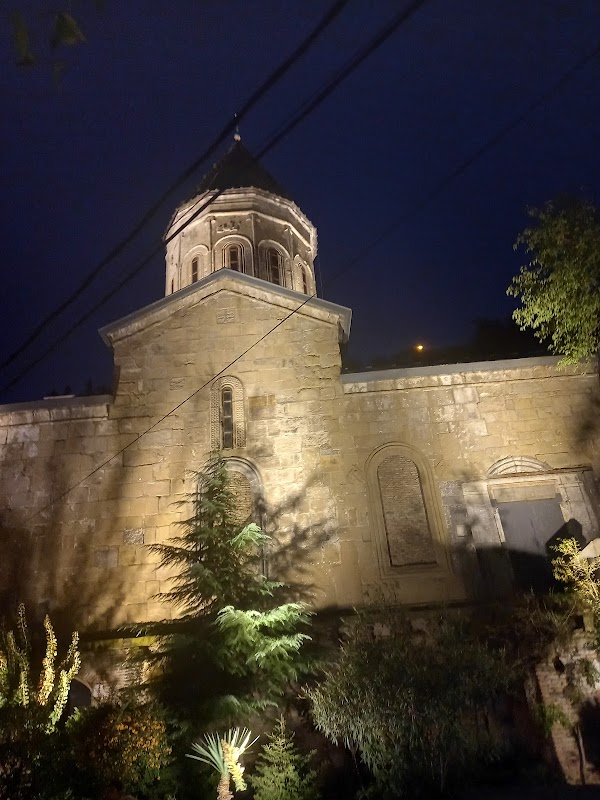
Mardin Old Town is a historic town in Mardin, Türkiye. The Zinciriye Medrese was completed in 1385. Artuqid rulers governed the region from Mardin. Most visitors spend 4-6 hours here. The free Lokali audio guide runs 6 minutes.
✓ Verified October 2026 · how we write these guides
Visitor facts
| Time needed | 4-6 hours |
|---|---|
| Lokali audio guide | 6 min · free |
| Type | Historic Town |
| Best for | Authentic finds |
| Location | Mardin, Türkiye |
| Coordinates | 37.3131, 40.735 |
| Languages | 45, in the Lokali app |
The story
Late afternoon light hits the stone and the whole hillside turns the colour of honey. The steps under your feet are worn smooth and slightly dished in the middle. Somewhere below, a call to prayer starts, and while it is still going a church bell rings from another lane. There is a smell of coffee with cardamom, and of hot stone cooling. Turn around and the ground simply drops away, and the Mesopotamian plain runs south until it disappears in haze.
Mardin is built on the steep southern face of a single hill, in long horizontal terraces. Streets run across the slope, not up it, and stairs and vaulted passages connect one level to the next. There is a rule behind the layout that people here still repeat — no house should block the view of the house behind it. Whether or not it was ever written down, the town obeys it. Almost every roof, terrace and window faces the same open plain.
The building material is a soft local limestone. It cuts easily when freshly quarried and hardens after exposure to air, which is why so much of this town is carved rather than merely built. Look at doorframes, window surrounds and cornices as you walk. You will find twisted colonettes, rosettes, chains of geometric knots, bands of leaves, and inscriptions cut in Arabic script. Stone carvers still work in Mardin, and you can hear chisels in some workshops.
Listen to the languages around you. In these streets you may hear Turkish, Kurdish and Arabic in the same conversation, and in a few places Turoyo, a modern form of Aramaic spoken by Syriac Christian families. Mardin has been a place where these communities live as neighbours for a very long time. Shops carry names in more than one script. When people here say the town is mixed, they mean it as a plain description of the street they grew up on.
Head for the Great Mosque, in the middle of the old town. Its ribbed minaret is the landmark you can find from almost any lane, and its dome sits behind a courtyard reached through a narrow entrance. The core of the building goes back to the medieval centuries when the Artuqid dynasty ruled this region from Mardin. Sit in the courtyard for a few minutes. It is several degrees cooler than the street, and the noise drops away sharply.
A short climb brings you to the Zinciriye Medrese, a religious school completed in 1385 by a local ruler. Two ribbed domes rise over a courtyard with a pool, and a decorated portal frames the entrance. Go up to the roof terrace. This is one of the best places in Mardin to understand the town — you see rooftop above rooftop stepping down the hill, then the flat plain beyond, with the castle rock directly behind you.
On the western edge of town stands another school, the Kasımiye Medrese, finished in the fifteenth century. Its courtyard holds a long, narrow water channel that runs from a small basin, widens into a pool, and ends. Guides here explain it as an image of a human life — source, growth, and end. The building sits slightly apart from the town, so the view from its terrace is uninterrupted, and the stone glows strongly at sunset.
Find your way to the Church of the Forty Martyrs, tucked behind a plain wall in a residential lane. It belongs to the Syriac Orthodox Church, an ancient Christian church that still prays in a form of Aramaic. The carved doorway and the interior curtains, silver lamps and painted panels are worth the search. It is named for forty Christian soldiers remembered as martyrs. Services are held here, so enter quietly and follow whatever the caretaker tells you.
Now look for an abbara. That is the local word for a vaulted passage that runs underneath a house, connecting two streets. They are dark, cool, sometimes only shoulder-width, and they usually open into sunlight at a completely different level of the town. Children use them as shortcuts. Walk through one slowly. The change in temperature, sound and light between one end and the other is one of the strongest physical sensations Mardin offers.
Here is a practical detail that surprises visitors. Many of these lanes are too narrow and too stepped for any vehicle, so the town still uses donkeys to collect rubbish and carry building material. They wear numbered tags and work a route. If you hear hooves behind you on a stone stair, flatten yourself against the wall and let them pass. It is not staged for tourism; it is simply the only method that works on this gradient.
Give the markets an hour. Coppersmiths hammer trays and pots in open workshops, and the sound carries down the street before you see them. Silversmiths make filigree, a technique of twisting fine silver wire into open patterns, which this region has produced for generations. You will also find soap made with oil pressed from the seeds of the wild terebinth tree, sold in rough green blocks. Buy one and your bag will smell of it for the rest of the trip.
End the day on any terrace facing south. The plain turns from yellow to grey-blue, lights come on in villages far out on the flat, and the temperature drops enough that you will want a jacket. Behind you the town stacks upward in the dark. Below, the land runs on toward Syria without a single hill in the way. Very few places let you stand on a staircase in a market town and see that far. Stay until the light is gone.
Key facts
What to look for
Practical tips
Common questions
How long do you need at Mardin Old Town?
Plan 4-6 hours. That is the time most visitors spend at Mardin Old Town. The free Lokali audio guide runs 6 minutes and is made to listen to while you walk.
Is there a free audio guide to Mardin Old Town?
Yes — the Lokali app narrates Mardin Old Town free of charge in 50+ languages. No ticket, tour group or subscription, and it works offline once downloaded.
Where is Mardin Old Town?
Mardin Old Town is in Mardin, Türkiye, at 37.3131, 40.735. Tap the map link on this page for directions.
What should you know before visiting Mardin Old Town?
Walk the terrace of the Zinciriye Medrese for the widest view
What is Mardin Old Town known for?
The Zinciriye Medrese was completed in 1385
On the map
Opens directions to Mardin Old Town from your location.
More to see in Mardin

Hear Mardin Old Town in your language
The full story, narrated, in 50+ languages. Download it before you go and it plays offline, at your own pace, with no ticket and no tour group.