
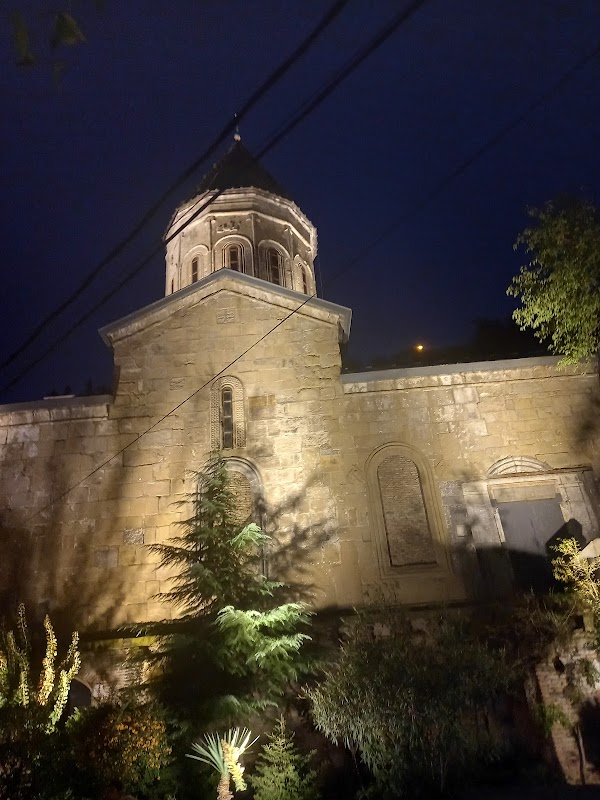
Photo: Dûrzan cîrano · Public domain · Wikimedia Commons
Deyrulzafaran Monastery is a monastery in Mardin, Türkiye. Patriarchs governed the Syriac Orthodox Church here from 1160 to 1932. The name means saffron monastery in Arabic. Most visitors spend 1-1.5 hours here. The free Lokali audio guide runs 6 minutes.
✓ Verified October 2026 · how we write these guides
Visitor facts
| Time needed | 1-1.5 hours |
|---|---|
| Lokali audio guide | 6 min · free |
| Type | Monastery |
| Best for | History |
| Location | Mardin, Türkiye |
| Coordinates | 37.2983, 40.7614 |
| Languages | 45, in the Lokali app |
The story
The road climbs away from Mardin and the noise thins out fast. By the time you reach the gate you can hear cicadas in the dry grass and nothing else. The hills here are bare rock and low scrub, pale gold, with almost no shade. The walls in front of you are built from the same stone, so from a distance the building looks like part of the slope. Put a hand on the gatepost. It is warm, smooth and dusty.
Step through into the courtyard and the proportions change. The buildings stand two storeys high around an open rectangle, with arcades, carved doorframes and a wide stone terrace facing out over the plain. There are pots of flowers. A cat crosses. If a service is running you may hear chanting from inside — low, unhurried, in a language that is not Turkish, Arabic or Kurdish. What you are hearing is a form of Aramaic.
This is a monastery of the Syriac Orthodox Church, an ancient Christian church of this region that still worships in Aramaic, a language related to the one spoken across the Near East two thousand years ago. Its Syriac name honours Mor Hananyo, a bishop who rebuilt the site in the eighth century. Christians have used this hillside since about the fifth century. It is one of the oldest continuously functioning monasteries anywhere.
The name most people use, Deyrulzafaran, comes from Arabic and means the saffron monastery. There are two explanations offered here, and neither is proven. One says saffron was once mixed into the mortar during construction. The other says saffron crocuses grew on these slopes. Look at the stone in strong afternoon light and you will see why the name stuck, whichever version is true — the whole complex turns a deep yellow-orange.
For a long stretch of its history this was the headquarters of an entire church. From 1160 until 1932, the patriarch of the Syriac Orthodox Church lived and governed from these rooms. Letters went out from here to congregations across the Middle East, India and later Europe. In 1932 the seat moved to Syria, and it is now in Damascus. The monastery kept working, but it changed from a centre of administration into something quieter.
Your guide will almost certainly take you underground first. Steps lead down into a low chamber with no windows. The ceiling is made of very large stone slabs laid side by side and fitted without mortar. There is a small opening at one end that lets a shaft of light in. Local tradition holds that people worshipped the sun in this room long before the monastery existed. Whether or not that is so, the room is clearly older than what stands above it.
Back at ground level, look at the doors. Several are heavy walnut, dark with age and handling, set with iron studs and carved panels. The main church door is low enough that most adults have to bow their head to pass through. That is deliberate in many old churches. Inside the church, notice the stone throne, the hanging lamps, the embroidered curtain across the sanctuary, and the arch above the altar cut in a single decorated band.
Along the walls of one chamber you will see a row of niches sealed with stone. These hold the remains of patriarchs and bishops who led the church from here. Names and dates are cut into the covering slabs in Syriac script, one under the next, over many centuries. It is a compact record of an institution. Stand at one end and read along the row — you are looking at the leadership of a church, filed into a wall.
Here is a detail people rarely expect. In 1876 a printing press was brought to this monastery, hauled up the same road you took. It printed in Syriac, Arabic and Ottoman Turkish, producing liturgical books and other texts for communities across the region. It was among the earliest presses working in this part of the world. The machine is on display, black and heavy, in a room that also holds old books and printing blocks.
The twentieth century was hard for the Syriac community of this region. Their numbers fell sharply during and after the First World War, and later many families emigrated to Europe for economic reasons and for security. Villages that were once Syriac-speaking emptied. In recent years some families have come back and restored houses in the surrounding countryside. The community here is small, but it is not a museum exhibit, and the church remains in use.
Today a handful of clergy and staff live at the monastery, along with students who come to learn the Syriac language and the chants. Visitors are welcome, and a guide will usually walk you through in a group. Cover your shoulders and knees. If you meet a service, wait at the back rather than crossing the floor. Photographs are usually fine in the courtyard, but ask before you photograph people or the sanctuary.
Before you drive back, walk to the edge of the terrace on the outer side. The plain opens up below and runs south, flat and pale, with dust hanging over it in summer. Behind you the buildings are silent except for a door somewhere. There is very little here to distract you — no traffic, no signs, no music. People have stood on this ledge and looked at that same view for a very long time, and now, for a few minutes, so are you.
Key facts
What to look for
Practical tips
Common questions
How long do you need at Deyrulzafaran Monastery?
Plan 1-1.5 hours. That is the time most visitors spend at Deyrulzafaran Monastery. The free Lokali audio guide runs 6 minutes and is made to listen to while you walk.
Is there a free audio guide to Deyrulzafaran Monastery?
Yes — the Lokali app narrates Deyrulzafaran Monastery free of charge in 50+ languages. No ticket, tour group or subscription, and it works offline once downloaded.
Where is Deyrulzafaran Monastery?
Deyrulzafaran Monastery is in Mardin, Türkiye, at 37.2983, 40.7614. Tap the map link on this page for directions.
What should you know before visiting Deyrulzafaran Monastery?
Cover shoulders and knees; this is a working monastery
What is Deyrulzafaran Monastery known for?
Patriarchs governed the Syriac Orthodox Church here from 1160 to 1932
On the map
Opens directions to Deyrulzafaran Monastery from your location.
More to see in Mardin
Hear Deyrulzafaran Monastery in your language
The full story, narrated, in 50+ languages. Download it before you go and it plays offline, at your own pace, with no ticket and no tour group.